

What Safety Gear Do You Need for Laser Cleaning?
Laser cleaning is becoming more common in factories, repair shops, shipyards, automotive restoration, mold maintenance, and metal surface preparation. It removes rust, paint, oil, oxide layers, and coatings without the same chemical waste or abrasive media used in traditional cleaning.
But the safety conversation has not always kept pace with adoption.
Many buyers focus on laser power, cleaning speed, portability, and surface results. Operators, meanwhile, may receive a handheld laser cleaner and assume ordinary welding glasses, work gloves, or shop clothing are enough. That assumption can be dangerous.
Laser cleaning safety gear is not an accessory. It is part of the process. The right PPE helps protect eyes, skin, and nearby workers from direct beams, reflected laser radiation, hot particles, smoke, and accidental exposure.
Table des matières
Why Laser Cleaning Safety Gear Matters More as Adoption Grows
Laser cleaning is attractive because it can reduce manual grinding, chemical stripping, and abrasive blasting in many applications. It can also make surface preparation cleaner and more controlled.
However, laser cleaning usually involves high-energy laser radiation. OSHA’s laser hazards overview states that the eye is generally more vulnerable to laser injury than skin, and that laser exposure can damage both eyes and skin under certain conditions. That is why safety must be addressed before the operator pulls the trigger, not after an incident occurs.
The issue is not only direct exposure. Reflections from shiny metal, curved parts, stainless steel, aluminum, and wet or coated surfaces can create unpredictable risks. A handheld laser cleaning system may also be used in open workshops where other employees can accidentally enter the hazard area.
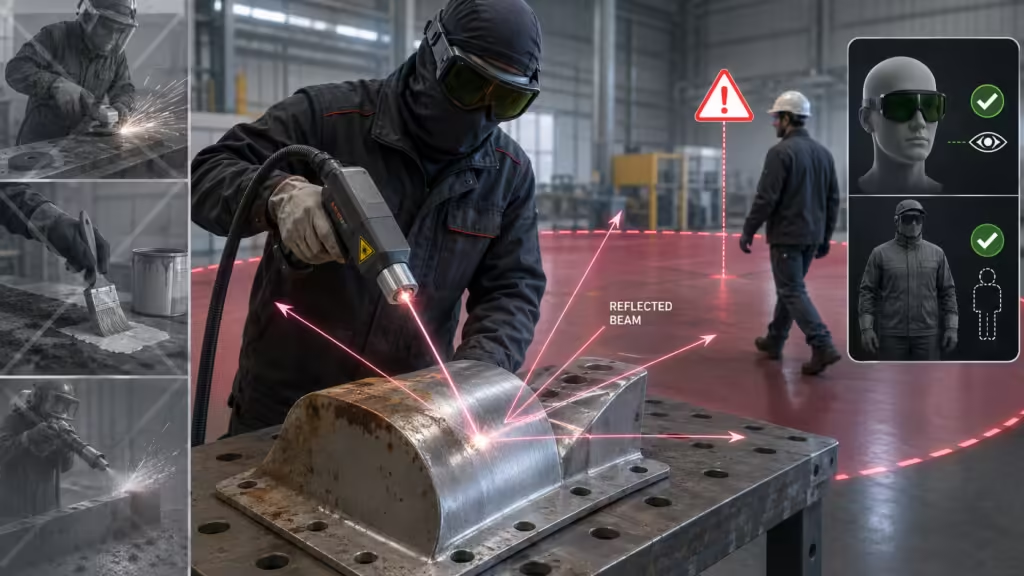
The Real Pain Points: Eyes, Skin, Reflections, and False Confidence
The first mistake is treating laser cleaning like ordinary power-tool work.
The second mistake is assuming that any dark lens can protect the eyes.
Laser safety eyewear must match the laser wavelength and optical density requirement. The general Wikipedia article on laser safety explains that eyewear must be selected for the specific laser type and wavelength range, and that lens color alone is not a reliable way to choose protection.
That matters because many laser cleaning systems use near-infrared fiber lasers, often around 1064 nm. This wavelength is not visible to the human eye, so an operator may not blink or look away before damage occurs.
Skin protection is also important. Laser radiation, reflected energy, hot particles, and heated contaminants can affect exposed arms, neck, hands, and face. In real workshops, operators often work close to rusted steel, painted parts, weld seams, and old coatings. The surface may look ordinary, but the cleaning process can release heat, fumes, dust, and debris.
Pro Tip: If the eyewear label does not clearly show the protected wavelength range and OD rating, do not assume it is suitable for laser cleaning.
Practical Value: PPE Reduces Risk Without Slowing the Job
Good safety gear should not make the job harder. It should make laser cleaning more repeatable and controlled.
The core PPE usually includes:
- laser safety eyewear matched to wavelength and OD;
- protective face shield when splash, debris, or reflection risk exists;
- flame-resistant or laser-resistant clothing;
- gloves suitable for heat, sparks, and surface debris;
- covered skin at the wrist, neck, and forearm;
- respiratory protection when coatings, rust, or contaminants create fumes;
- barriers, curtains, or controlled work zones.
Practical PPE also protects productivity. Eye injuries, burns, near misses, and unsafe work zones can stop production faster than a slower cleaning cycle. A better safety setup reduces uncertainty and helps operators work with more confidence.
Application Scenarios Where PPE Decisions Change
Laser cleaning is not one safety scenario. Different jobs create different risk profiles.
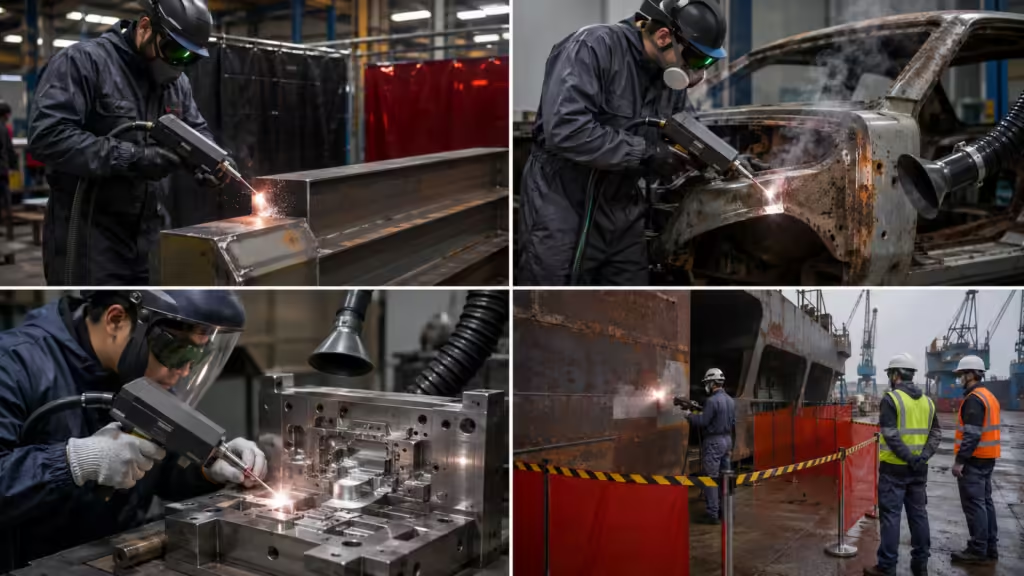
In metal fabrication, operators may clean weld seams, oxide layers, or rust before coating. Reflective edges and curved surfaces can increase reflection risk, so eyewear and barriers become especially important.
In automotive restoration, rust removal often happens on irregular parts, body panels, frames, and old painted surfaces. Operators should consider both laser radiation and fumes from aged coatings.
In mold cleaning, the work may involve precision surfaces and close-range operation. The operator’s face, hands, and forearms may be nearer to the laser spot, making correct eyewear and skin coverage essential.
In shipyards and heavy equipment repair, laser cleaning may happen on large steel structures. The challenge is often area control. Nearby workers may not realize a laser process is active, so warning signs, barriers, and training become part of the safety gear system.
Buyer Insight: A portable laser cleaner may be easy to move, but safety planning must move with it. PPE, warning signs, barriers, and extraction should follow the work area.
How to Choose Laser Cleaning PPE Without Guessing
Start with the laser specifications.
For eyewear, look for:
- wavelength coverage that matches the laser;
- appropriate optical density;
- certified labeling;
- side protection;
- fit over prescription glasses if needed;
- enough visible light transmission for safe work;
- compatibility with helmets or face shields.
- For skin protection, look for:
- flame-resistant material;
- full arm coverage;
- gloves that protect against heat and debris;
- no exposed wrist gap;
- durable workwear that does not melt easily.
For the work area, consider:
- laser safety curtains or barriers;
- controlled access;
- warning signs;
- extraction or ventilation;
- documented training;
- a laser safety officer or responsible supervisor.
Future Trends
The future of laser cleaning safety will not rely on PPE alone.
More equipment will likely include enclosed or semi-enclosed cleaning heads, better interlocks, automatic shutoff, work-zone sensors, and clearer operator interfaces. Buyers will also ask more questions about risk assessments, training packages, eyewear compatibility, and fume control.
Laser cleaning may also move from specialist teams into regular maintenance departments. That shift makes training more important. A highly trained laser technician may understand reflection hazards, but a general maintenance worker may not.
The companies that succeed will be the ones that treat safety as part of the workflow. That means PPE selection, hazard-zone planning, operator training, and maintenance checks should be documented from the start.
Conclusion
Laser cleaning can be a valuable surface preparation method, but it should never be treated as a low-risk cleaning tool. Eye and skin protection must be selected according to the laser system, workpiece material, reflection risk, and operating environment.
The best safety setup combines laser-rated eyewear, skin protection, barriers, ventilation, training, and clear work-zone control. For buyers and operators, the goal is not simply to meet a checklist. It is to create a safer, more reliable laser cleaning process that protects people while supporting consistent production.
FAQ
What eye protection is needed for laser cleaning?
Use laser safety eyewear matched to the laser wavelength and optical density requirement. Do not choose eyewear by lens color alone.
Can welding goggles protect against laser cleaning?
Usually not reliably. Welding goggles are designed for welding hazards, not necessarily the specific wavelength and OD required for laser cleaning.
Does laser cleaning damage skin?
It can. Direct or reflected laser radiation, heated particles, and hot surface debris may injure exposed skin.
Is a face shield enough for laser cleaning?
No. A face shield may help against debris or splash, but it does not replace certified laser safety eyewear.
Do operators need ventilation?
Often, yes. Rust, paint, oil, and coatings may create fumes or particles during cleaning. Ventilation or extraction should be evaluated for the material being removed.
Should laser cleaning be done in a controlled area?
Yes. A controlled work area helps prevent accidental exposure to nearby workers and improves overall safety management.