
MetalProcessing Laser Solutions
Laser Solutions for Metal Processing
Metal processing isn’t just about shaping material; it’s about hitting tolerances and maintaining throughput. Metal Processing Laser Solutions are designed for exactly that—whether you are cutting complex geometries, welding thin-walled enclosures, cleaning oxides before coating, or marking serial numbers for traceability. Traditional mechanical methods often create bottlenecks. The value is simple: we replace brute force with precision light to boost batch consistency, eliminate secondary manual grinding, and drastically reduce the cost of rework.
In the automotive and auto parts industry, lasers are not adopted to look “advanced”—they’re used to make mass production consistent, traceability reliable, and assembly quality repeatable. OEMs and suppliers typically struggle with three costly problems: unreadable codes that break traceability, unstable welds that increase rework and quality variation, and inconsistent surface conditions that cause coating, bonding, or welding defects. A practical laser solution focuses on reducing these uncertainties so every batch meets the same standard.
Common Challenges in Metal Processing
If your shop floor struggles with these issues, our solutions are designed to fix them:
- Secondary Processing: Cutting leaves heavy burrs or dross, requiring manual deburring before assembly.
- Weld Distortion: Thin sheet metal warps due to high heat input from TIG/MIG, ruining dimensional accuracy.
- Inconsistent Surface: Rust, oil, or oxide layers cause weld porosity or paint peeling downstream.
- Material Sensitivity: Struggling to switch parameters between Stainless Steel, Aluminum, and Copper without trial-and-error.
- Traceability Gaps: Printed labels fall off, or shallow marks get covered by paint, losing track of batches.
Typical Materials & Workpieces
Matériaux :
- Stainless Steel (304, 316)
- Carbon Steel (Mild Steel)
- Aluminum (6061, 5052)
- Copper & Brass (High reflectivity)
- Galvanized Steel
Pièces à usiner :
- Sheet metal assemblies and brackets
- Electronic enclosures and chassis
- Tubular frames and structural pipes
- Machined plates and flanges
Surface Conditions:
- Handling: Rust, mill scale, oxidation, grease/oil contamination.
Goals: What You’re Trying to Achieve
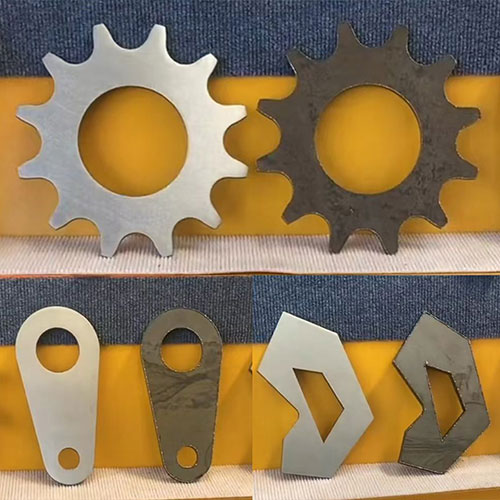
- Clean Cutting Edges: Burr-free cuts with tight tolerances, ready for immediate welding or assembly.
- Stable Seams: High-strength welds with low thermal distortion and minimal post-weld cleanup.
- Surface Prep: Virgin surface quality to ensure perfect adhesion for coatings or welding.
- Permanent Identification: Deep, high-contrast markings that remain readable throughout the product lifecycle.
Chemins de traitement recommandés
1. Laser Cutting Path
- Best For: Sheet metal fabrication, brackets, fixtures, and rapid prototyping.
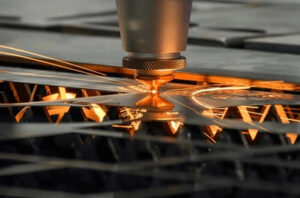
- The Process: Focused high-power beams vaporize metal with nitrogen/oxygen assist gas.
- The Output: Square edges, no tool wear, and the ability to cut complex nests to minimize scrap.
2 Laser Welding Path
- Best For: Thin-walled enclosures, battery packs, and aesthetic structural parts.
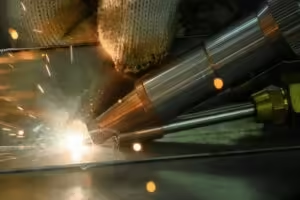
- The Process: “Wobble” head technology stirs the weld pool for better gap bridging without overheating the part.
- The Output: Hermetic seals, consistent bead appearance, and significantly reduced thermal deformation.
3 Laser Cleaning Path
- Best For: Removing rust, stripping paint, or cleaning oxides before welding/coating.
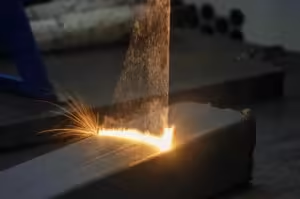
- The Process: High-peak-power pulses ablate contaminants without damaging the base metal.
- The Output: A chemically clean surface with consistent surface energy for reliable bonding.
4 Laser Marking / Dot Peen Path
- Best For: Part identification, QR/DataMatrix codes, and logo branding.
- The Process: Annealing (black mark) or engraving (material removal) based on durability needs.
- The Output: Permanent traceability that survives abrasion, heat, and chemicals.
Equipment Needed for Metal Processing
To achieve these results, you need the right tool for the job:
- Fiber Laser Cutting Machines: For precision geometry and speed.
- Laser Welding Machines: Handheld for flexibility or automated for volume.
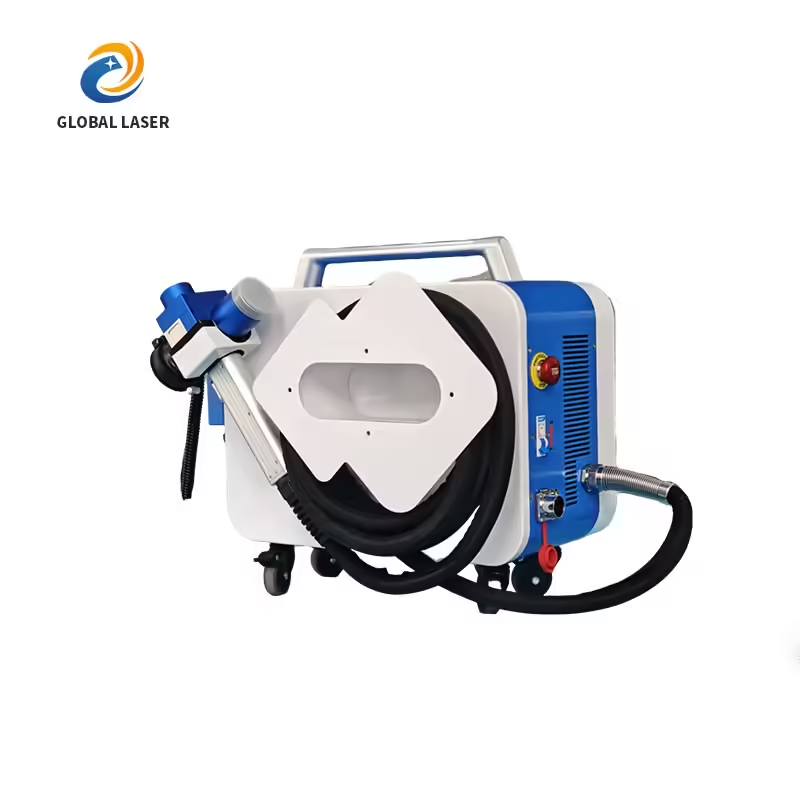
- Laser Cleaning Machines: Pulse lasers for mold/part cleaning.
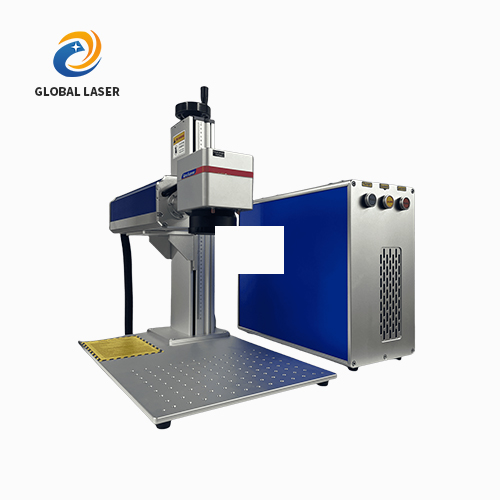
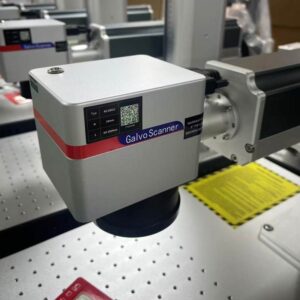
- Laser Marking Machines: Fiber/MOPA/UV sources for coding.
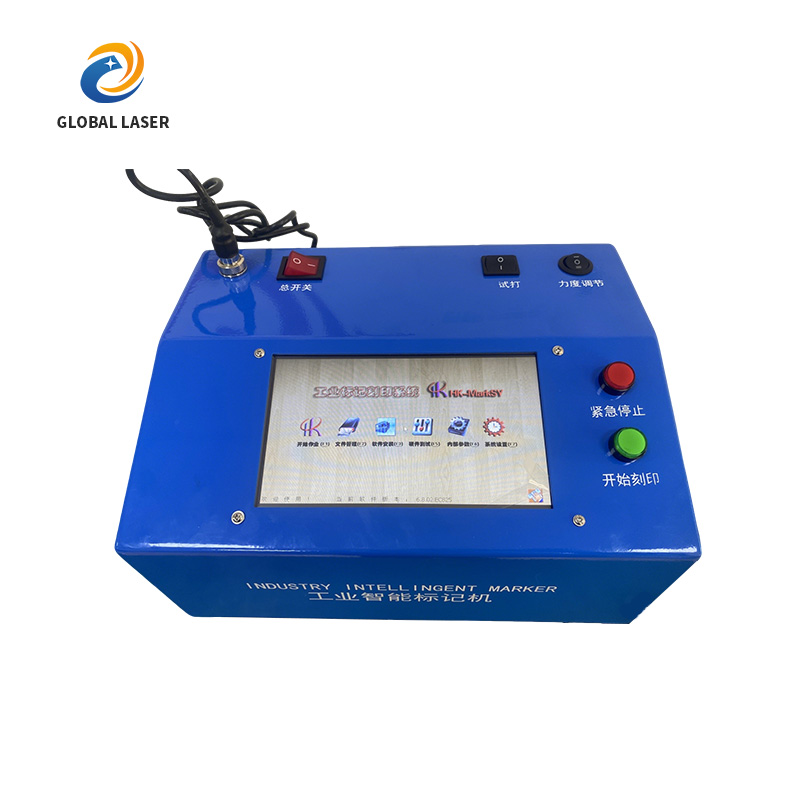
- Electric Dot Peen Marking Machines: (Optional) For deep marking on rough castings or high-wear heavy machinery.
Comment choisir la bonne configuration
Don’t just buy “watts”; buy the configuration that fits your workflow.
1 Production Volume & Cycle Time
- Prototype/Job Shop: Handheld or open-table systems offer the fastest changeover between diverse jobs.
- High Volume: Enclosed, automated systems with rotary tables or conveyor integration are required to hit strict Takt times.
2 Material & Thickness Sensitivity
- Reflective Metals: Copper and Aluminum require sources with back-reflection protection.
- Heat Sensitivity: Thin medical parts need pulsed lasers (MOPA/UV) to prevent discoloration; structural steel needs Continuous Wave (CW) power.
3 Workstation Type
- Handheld: Maximum mobility for large parts that can’t be moved easily.
- Desktop/Stationary: Best for small parts requiring high precision.
- Inline: Integrated directly into your PLC-controlled assembly line.
4 Fixturing & Consistency
- The Golden Rule: A laser is only as accurate as the fixture holding the part. If your part moves, the laser misses. Invest in rigid, repeatable tooling over higher laser power.
Quality Control & Acceptance Tips
- Coupe : Inspect for dross on the bottom edge and check perpendicularity.
- Soudage: Verify penetration depth and check for cracks or porosity (visual or cross-section).
- Nettoyage : Perform a “Water Break Test”—water should sheet off, not bead up, indicating a clean surface.
- Marquage: Verify Grade A/B readability with a standard barcode verifier.
Downloads for Metal Processing
- [PDF] Metal Processing Application Guide
- [Checklist] Process Selection & Fixturing Guide
- [Reference] Laser Marking Sample Gallery (SS/Al/Brass)
- [Data Sheet] Starter Parameters (Cut/Weld/Clean)
- [Guide] Daily Maintenance Checklist
Stop Guessing. Validate Your Process. Don’t rely on specs alone. Send us your drawings or physical parts. We will run a feasibility test, calculate your cycle time, and provide a process report proving the cost-savings.
[ Upload Project Details & Request Sample Testing ]
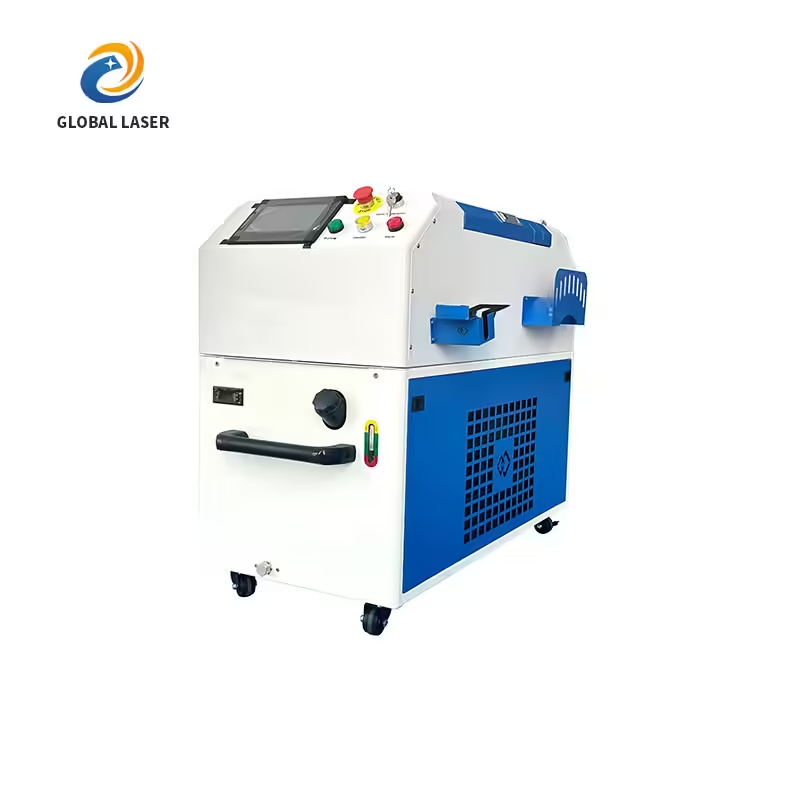
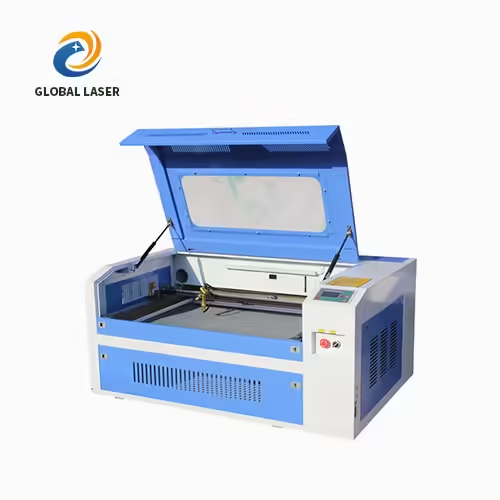
Best value laser equipment for Metal Processing
Get factory-ready laser equipment built for modern metal fabrication—where clean edges, structural integrity, and production speed matter most. From high-precision fiber cutting and distortion-free welding to surface oxide removal and permanent part traceability, our solutions focus on eliminating secondary grinding, ensuring batch consistency, and maximizing profit per part. Share your material type, thickness, and daily throughput, and our engineers will recommend the most cost-effective configuration for your shop.
Metal Processing news and the latest application solutions
Stay up to date with what’s happening in industrial metal fabrication—plus the practical laser solutions that help on the shop floor. Here we share real application tips for precision cutting, low-distortion welding, and surface cleaning, along with new use cases, process ideas, and lessons learned from production. If you’re facing a specific challenge, you’ll find clear, actionable guidance—not just industry headlines.
-
 Si votre atelier de fabrication s'appuie encore exclusivement sur le soudage TIG manuel pour les pièces en acier inoxydable de faible à moyenne épaisseur, il est probable que vous perdiez de l'argent dans le département de meulage et de polissage.
 -
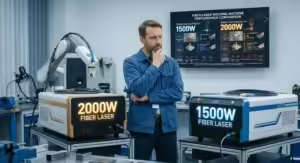 Comment choisir un soudeur laser 1500W VS 2000W Cette question:Pour la plupart des fabricants de tôles standard, un soudeur laser 1500W est tout à fait suffisant pour répondre aux exigences de soudage de tôles minces. Cependant
 -
-
-
-

-
-
-
-

-
-
Téléchargement de ressources
Download metal processing resources such as cutting speed charts, weld penetration guides, sample marking libraries, and maintenance checklists for laser cutting, welding, cleaning, and marking. These files cover common alloys like stainless steel, aluminum, and carbon steel. If you can’t find the specific parameter for your material thickness or grade, contact us with your specs and we’ll provide the relevant testing data.
Process Parameters & Speed Charts
PDF • 5,2 Mo
Application & Configuration Guides
PDF • 5,2 Mo
Sample Libraries
PDF • 5,2 Mo
Le premier choix des clients du monde entier
Les fabricants choisissent GLOBALLASER pour une raison simple : la constance des résultats en production. De la découpe laser au soudage, en passant par le nettoyage et le marquage, nos machines sont conçues pour un fonctionnement fiable, une qualité constante et une intégration parfaite à votre flux de production.
Machine de marquage laser Vision
Fabricants de composants électroniques
Machine de marquage laser à fibre séparée
Propriétaire d'une entreprise artisanale de publicité
Machine de marquage portable standard
Fournisseur de pièces industrielles

Machine de marquage laser CO2 pour armoire
Fabricants d'équipements sur mesure
Machine de gravure laser 3020
Société de machines de précision
FAQ
Common Questions from the Shop Floor Every production line is unique, but the physics of metal processing remains the same. Below are the most frequent technical questions we receive from engineers and plant managers regarding feasibility, safety, and integration. If your specific scenario isn’t covered here, upload your part drawing or material specs directly—we’ll run a feasibility test to give you the real answer.
What materials can be processed?
Will edges require deburring?
Can lasers weld reflective metals?
Is a safety enclosure mandatory?
What consumables are needed?
How deep can we mark?
Can existing lines be automated?
Do I need specialized gas?