

Automotive Laser Cleaning for Rusty Engine Blocks and Parts
Classic car restoration is rarely about cleaning metal for appearance only. A rusty engine block, oxidized gearbox housing, corroded brake caliper, or painted suspension arm may be hard to replace, expensive to reproduce, or important to the originality of the vehicle. That is why Automotive Laser Cleaning is becoming a serious option for restoration shops, auto repair workshops, and aftermarket service providers.
This guide explains how Automotive Laser Cleaning works in engine block and parts restoration, where it performs best, how it compares with sandblasting or chemical cleaning, and what buyers should check before adding laser cleaning to an automotive workshop.
Tabla de contenido
Why Classic Car and Parts Restoration Needs Better Cleaning Methods
In automotive restoration, surface cleaning affects more than appearance. It can influence inspection, coating adhesion, machining decisions, and final part value. Old parts often carry layers of rust, oil, carbon deposits, paint, grease, and oxidation. Removing these layers too aggressively can damage casting marks, edges, threads, or original metal surfaces.
Traditional methods still have their place. Sandblasting can be effective for heavy rust or large rough surfaces. Chemical cleaning can remove oil and grease. Hand grinding works for small areas. But each method has trade-offs.
Abrasive methods may remove more base material than intended. Chemical cleaning can create waste-handling concerns. Manual grinding is slow and depends heavily on operator skill. Automotive Laser Cleaning gives restoration shops another option: a more controlled way to remove contamination from valuable metal parts.
What Automotive Limpieza láser Actually Does
Automotive Laser Cleaning uses laser energy to remove unwanted surface layers such as rust, oxide, old coating, paint residue, carbon deposits, and oil contamination. In simple terms, the laser targets the contaminant layer, heats it rapidly, and causes it to detach, vaporize, or break away from the surface.
This process is related to laser ablation. The Wikipedia page on laser ablation explains that laser ablation removes material from a solid surface by irradiating it with a laser beam, and it also notes cleaning-related uses such as removing paint or coatings from metal surfaces.
For automotive work, the value is control. A skilled operator can clean a selected area without blasting the entire part. That makes Automotive Laser Cleaning useful for engine housings, cast iron components, aluminum parts, brackets, hubs, exhaust sections, and classic car panels where preserving details matters.
Automotor Limpieza láser for Engine Block and Parts Restoration
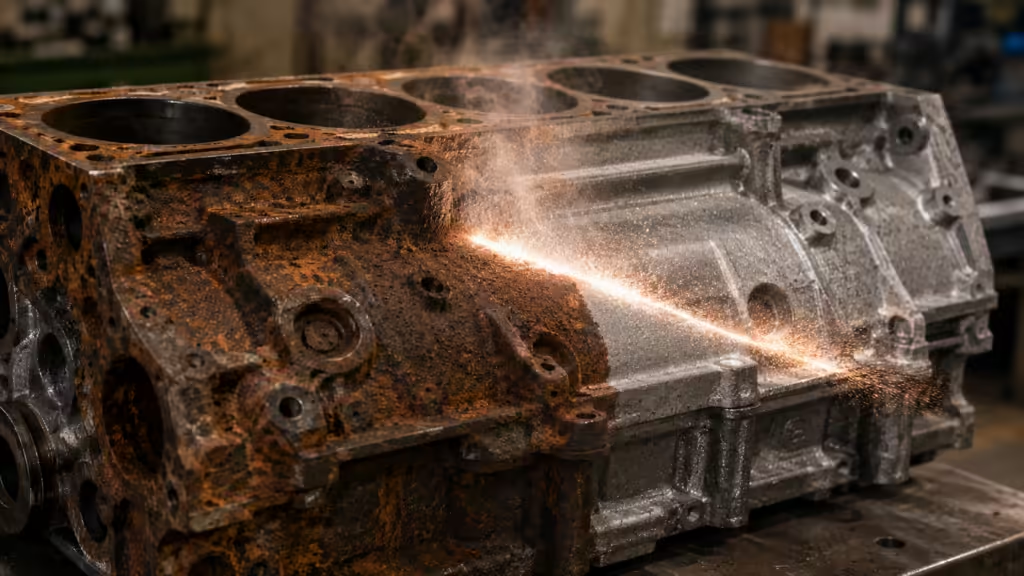
Engine block and parts restoration is one of the strongest use cases. Engine blocks often have complex shapes: ribs, bolt holes, coolant passages, casting textures, stamped marks, and tight corners. Dirt and rust can collect in areas that are difficult to reach with hand tools.
Automotive Laser Cleaning can help remove rust, oxidation, oil film, old paint, and surface contamination from engine blocks and related parts before inspection, machining, coating, or reassembly.
This is especially useful for:
Cast iron engine blocks
- Aluminum engine components
- Cylinder heads
- Gearbox housings
- Brackets and mounts
- Brake calipers
- Suspension arms
- Exhaust parts
- Wheel hubs
- Chassis components
Buyer Insight: For high-value classic car parts, the goal is not just to “make it shiny.” The goal is to clean the part while keeping the original shape, surface identity, and usable metal as intact as possible.
Laser Rust Removal for Car Parts Without Heavy Abrasion
Rust removal is one reason Automotive Laser Cleaning attracts attention in the car restoration world. The process can create a clear before-and-after effect, which is useful not only in the workshop but also for social media content.
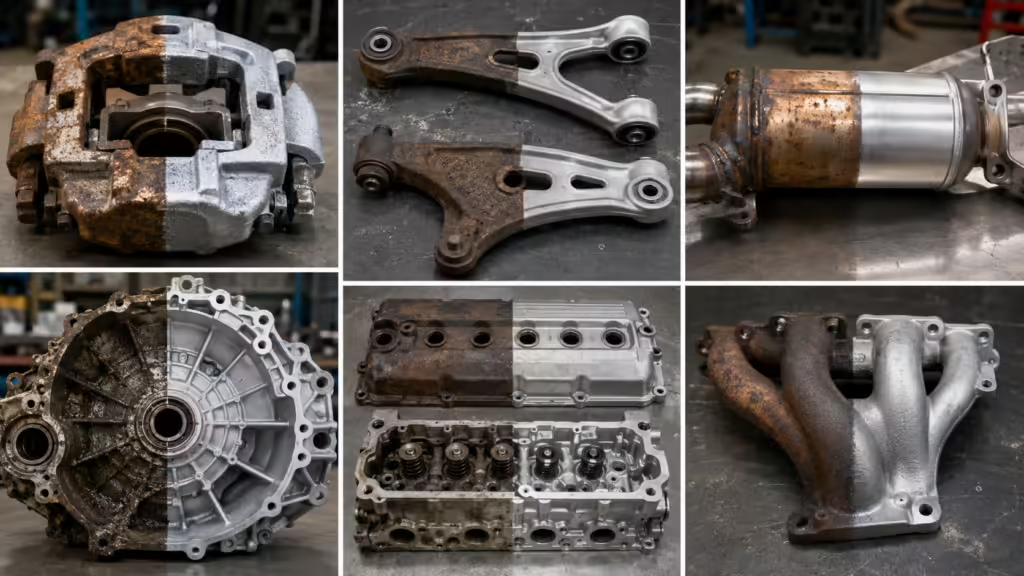
For example, brake calipers, suspension parts, brackets, hubs, and exhaust components often have corrosion on exposed surfaces. Manual cleaning may take time, and aggressive blasting may require masking or post-cleaning. Laser cleaning can target rusty sections with less secondary media waste.
This does not mean laser cleaning replaces every method. Heavy scale, thick body filler, or large coating areas may still require other surface preparation methods. But for localized corrosion, detailed parts, and restoration-focused cleaning, Automotive Laser Cleaning offers a more precise workflow.
Limpieza láser vs Sandblasting for Automotive Parts
Many restoration shops already understand sandblasting. It is familiar, effective, and relatively fast for many jobs. The real question is not whether sandblasting is bad. The better question is when laser cleaning offers a better fit.
| Factor | Automotive Laser Cleaning | Chorro de arena |
|---|---|---|
| Surface control | More selective and localized | Broader abrasive impact |
| Media residue | No blasting media left behind | Requires cleanup |
| Waste handling | Less secondary media waste | Dust and used media need control |
| Detail preservation | Useful for delicate or valuable parts | Can affect edges or surface texture |
| Best fit | Restoration, precision cleaning, local rust removal | Heavy coating removal, rough surface preparation |
The U.S. EPA has discussed automotive parts cleaning in the context of reducing high-VOC solvent use, noting benefits when shops move away from certain solvent-heavy cleaning methods. This is relevant because many workshops are looking for cleaner and more controlled surface preparation options. EPA aqueous parts cleaning case study
Automotive Laser Cleaning is not always the fastest method for every large area. Its advantage is precision, reduced media cleanup, and strong visual control.
Why Restoration Shops Can Turn Automotive Laser Cleaning Into a Service
For restoration businesses, Automotive Laser Cleaning can become more than an internal process. It can become a paid service.
Classic car owners often care about originality, surface preservation, and clean restoration work. A shop that can show controlled rust removal on an engine block, brake part, or chassis bracket has a strong service story. The visual effect is also easy to share: rusty part, laser pass, restored metal surface.
That matters in the automotive aftermarket. A service that is visual, technical, and practical is easier to market than a process hidden behind the workshop door.
Where Automotive Laser Cleaning Works Best
Automotive Laser Cleaning is most useful when the part has value, detail, or a restoration purpose.
Strong applications include engine block cleaning, engine parts restoration, brake caliper restoration, gearbox housing cleaning, exhaust rust removal, suspension part cleaning, chassis component cleaning, paint removal from metal parts, and surface preparation before coating.
It is also useful before inspection. Once rust, oil, and paint are removed, cracks, casting defects, corrosion pits, and surface damage may become easier to see.
For aftermarket shops, the value is flexibility. The same laser cleaning machine may be used across different metal parts, as long as the operator adjusts settings and follows proper safety procedures.
What Buyers Should Check Before Choosing a Laser Cleaning Machine
A laser cleaning machine for automotive work should be evaluated by application, not only by power.
Buyers should check:
1.Pulsed or continuous laser type
2.Power level and cleaning speed
3.Cleaning head weight and ergonomics
4.Adjustable cleaning modes
5.Suitability for cast iron, steel, and aluminum parts
6.Ability to clean curves, grooves, and corners
7.Fume extraction compatibility
8.Laser safety protection
9.Operator training
10.Maintenance cos
11.Portability inside the workshop
12.After-sales support
The Laser Institute of America describes itself as the secretariat and accredited standards developer of the ANSI Z136 laser safety standards, making it a useful reference point for buyers reviewing laser safety requirements. Laser Institute of America.
Pro Tip: Do not choose a machine only because it looks powerful in videos. Automotive parts vary in material, shape, contamination thickness, and heat sensitivity. Adjustable settings and operator training are critical.
Safety and Workshop Setup Matter
Automotive Laser Cleaning must be handled as an industrial process. Lasers can create eye and skin hazards if used incorrectly. OSHA states that the human body is vulnerable to laser output, and the eye is often more vulnerable than skin.
A proper workshop setup should include:
- Laser safety glasses matched to wavelength
- Controlled work area
- Warning signs
- Beam control or shielding
- Fume extraction
- Fire awareness
- Operator training
- Clear procedures for reflective parts
This is especially important when cleaning painted parts, rusty surfaces, oily components, or old coatings. The removed material may produce fumes or particulates, so extraction and filtration should be planned before daily use.
Future Trend
The automotive aftermarket is becoming more service-driven. Customers want restoration quality, visual proof, and better documentation. Shops want processes that reduce manual labor, create premium service value, and generate social media content.
Automotive Laser Cleaning fits this trend because it is practical and visually strong. It can help shops show technical capability while solving real cleaning problems.
Aftermarket businesses should also remain aware of safety and regulatory context. SEMA’s overview of federal regulation of aftermarket parts notes that certain aftermarket parts are regulated based on safety and emissions needs, which reminds shops that restoration and modification work should be handled with attention to compliance.
Conclusión
Automotive Laser Cleaning is not just a new way to remove rust. For classic car restoration, engine block and parts restoration, and aftermarket repair services, it offers a more controlled way to clean valuable metal components while reducing heavy abrasion and secondary media cleanup.
For shops that want to upgrade restoration quality, add a premium service, and create more shareable before-and-after results, Automotive Laser Cleaning can become a practical investment. The best results come from matching the machine, settings, safety setup, and operator skill to the parts being restored.
Preguntas frecuentes
Is Automotive Laser Cleaning safe for engine blocks?
Yes, when proper settings, operator training, laser protection, and fume extraction are used. It can clean rust and coatings while reducing heavy mechanical abrasion.
Can laser cleaning remove rust from car parts?
Yes. It can remove rust, oxidation, paint residue, carbon deposits, oil film, and surface contamination from many metal automotive parts.
Is laser cleaning better than sandblasting?
It depends on the job. Laser cleaning is more precise and creates less media waste, while sandblasting may still be useful for large rough surfaces.
Can laser cleaning damage metal parts?
Improper settings can affect the surface. Power, speed, focus, and cleaning mode should match the part material and contamination type.
What car parts can be laser cleaned?
Common examples include engine blocks, brake calipers, suspension arms, exhaust parts, gearbox housings, brackets, hubs, and chassis components.
Is laser cleaning useful for restoration shops?
Yes. It can become a premium restoration service because it is precise, visually impressive, and useful for valuable or hard-to-replace metal parts.