

How to Choose a Laser Welding Machine in 2026 Without Overpaying
Buying a laser welding machine no longer just about choosing the highest wattage. Many factories already know that laser welding can be faster, cleaner, and easier to learn than some traditional welding methods. The harder question is more practical: which power level, material range, welding speed, function package, and service support actually fit your production?
A 1500W machine may be enough for thin sheet metal. A 2000W system may offer a stronger balance for mixed fabrication. A 3000W laser welder may be better for thicker materials or higher-output workshops. This buying guide helps you compare power, materials, speed, labor cost, 3-in-1 functions, after-sales support, and ROI before you commit to a purchase.
جدول المحتويات
Why Laser Welding Machine Selection Matters
Manufacturers are under pressure to reduce skilled labor dependence, shorten welding cycles, and improve surface quality. Laser welding is attractive because a concentrated laser beam can create narrow welds, deep penetration, and high welding rates in suitable applications. The general laser beam welding overview explains that laser welding uses a concentrated heat source and is often used in high-volume or precision applications.
The business reason is just as important. When welding labor is expensive or difficult to hire, a laser welding machine can help simplify training, reduce post-weld grinding, and increase throughput. AWS also notes in its article on handheld laser welding standards that handheld laser welding can reduce cleanup time and distortion in certain manufacturing environments.
But the wrong machine can create new problems. Too little power limits material thickness. Too much power raises purchase cost without improving ROI. Poor safety planning increases risk. Weak after-sales support can leave production stuck when consumables, parameters, or training are needed.
The Biggest Buying Mistake: Choosing Power Before Application
Many buyers start with the question: “Should I buy 1500W, 2000W, or 3000W?” That is understandable, but it is not the best first step.
The better starting point is:
- ما هي المواد التي تقوم بلحامها في أغلب الأحيان؟
- What thickness range is common?
- Are welds continuous or intermittent?
- Is the priority speed, appearance, penetration, or low distortion?
- How experienced are the operators?
- Do you need welding only, or welding plus cleaning and cutting?
- What is the expected daily workload?
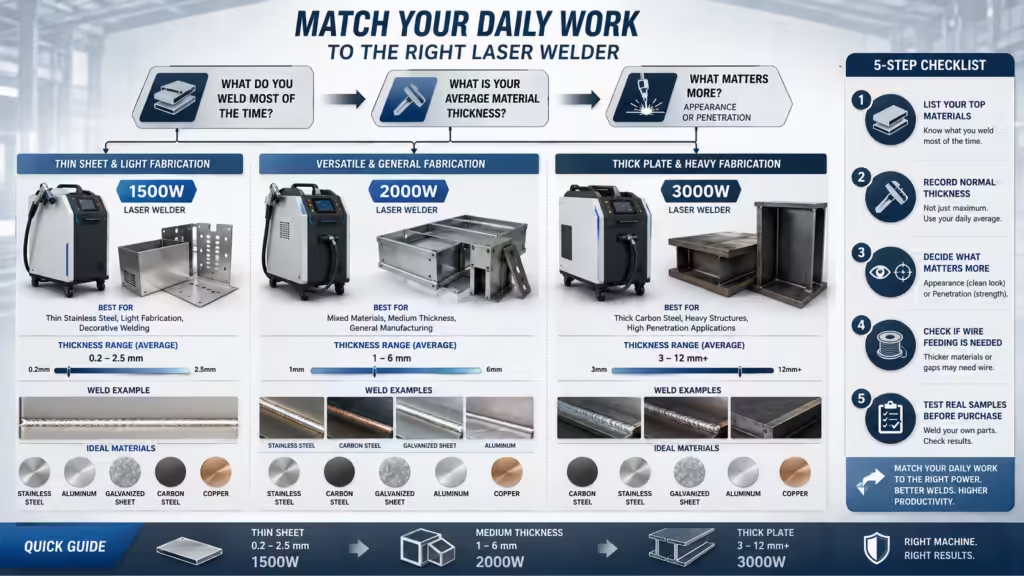
A laser welding machine should match the production mix. If most work is thin stainless steel, light sheet metal, cabinets, frames, kitchen equipment, or small fabrication parts, a lower or mid-range power may be enough. If the shop handles thicker carbon steel, aluminum, structural parts, or continuous high-volume work, higher power may deliver better efficiency.
Buyer Insight: Power is not the only performance factor. Wire feeding, wobble function, cooling system, laser source quality, welding head stability, parameter presets, and operator training can all affect the final weld.
Power Selection: 1500W, 2000W, or 3000W?
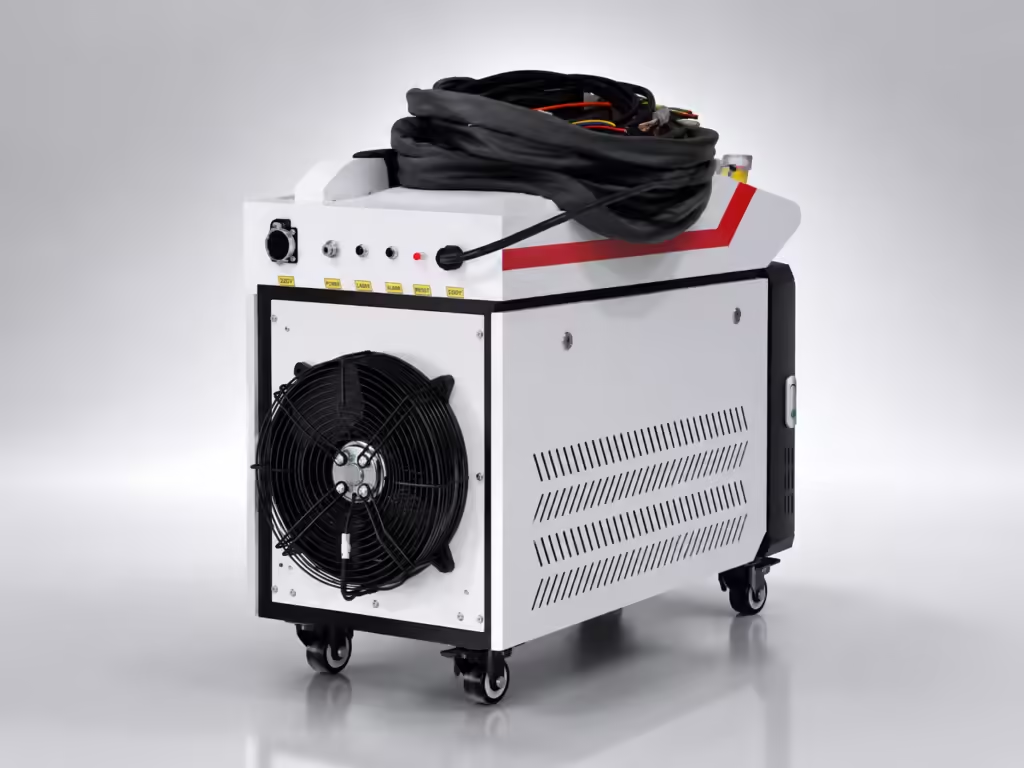
A 1500W laser welding machine is often a practical entry point for thin sheet metal and light fabrication. It may suit stainless steel cabinets, signage, kitchen equipment, light frames, and general sheet metal repairs. For buyers focused on cost control and moderate thickness, the جهاز لحام بالليزر 1500 واط can be considered when the main workload does not require very deep penetration.
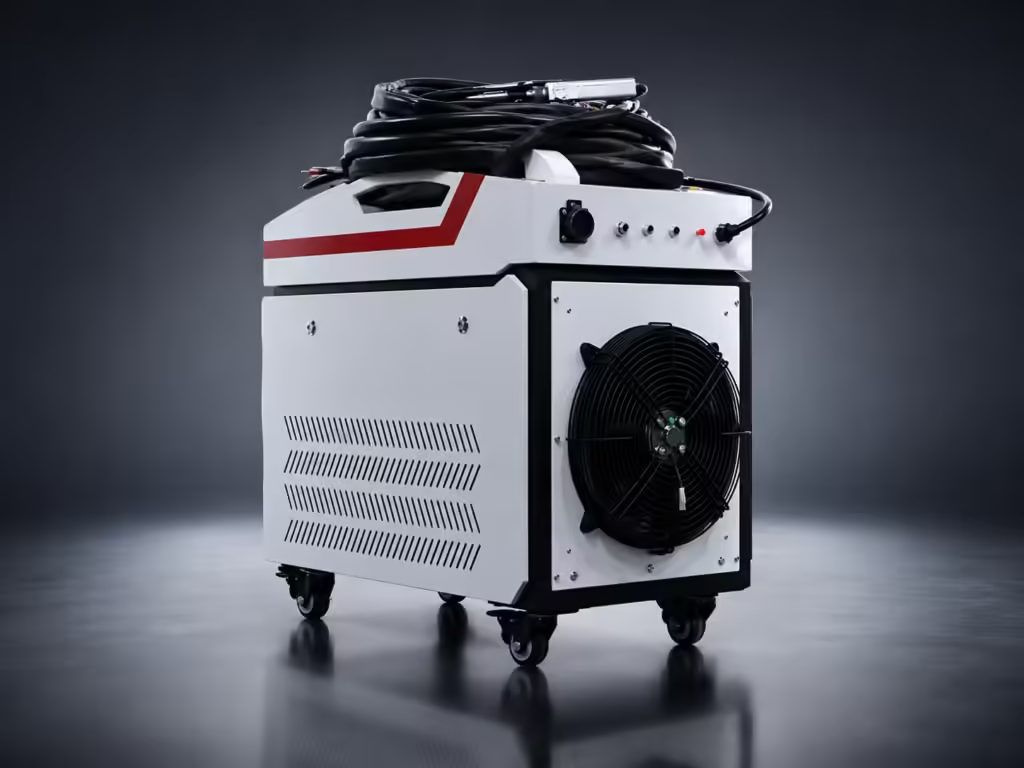
A 2000W laser welding machine is usually the more balanced choice for many workshops. It offers stronger power reserve than 1500W while avoiding the higher investment of 3000W. For mixed stainless steel, carbon steel, aluminum, and medium-thickness fabrication, the لحام بالليزر 2000 واط can be a good fit when production needs flexibility.
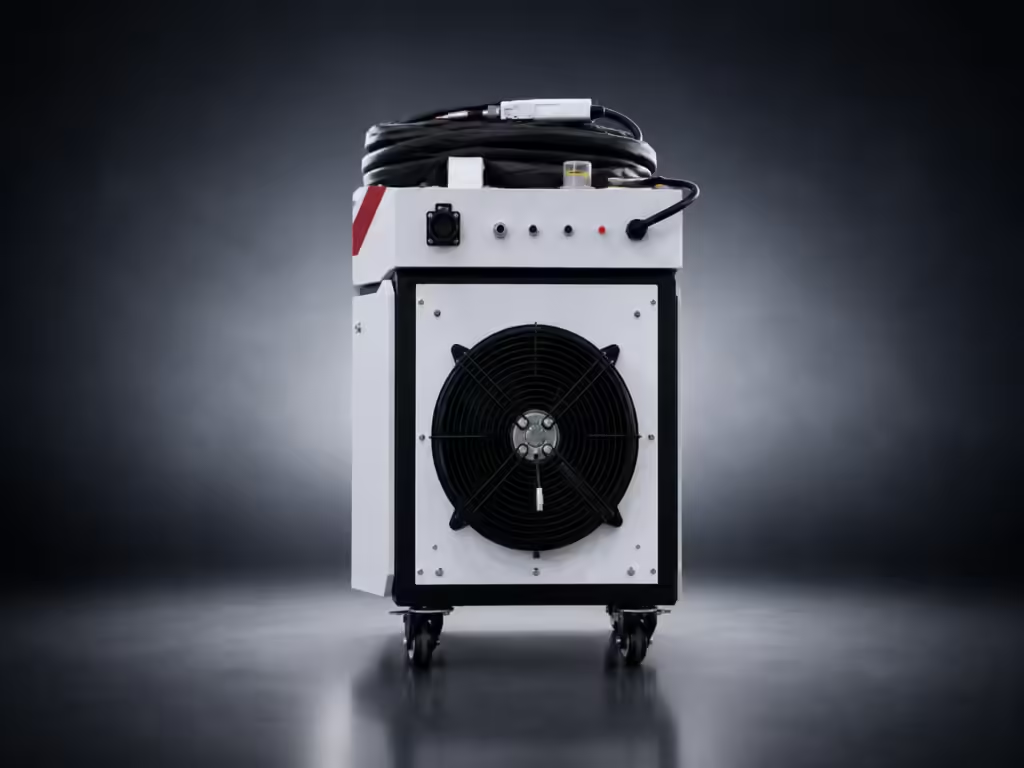
A 3000W laser welding machine is better suited for thicker materials, faster welding on suitable jobs, and heavier-duty production. The لحام ليزر 3000 واط makes more sense when the buyer needs higher productivity, stronger penetration capacity, or broader processing margin.
The key is not buying the strongest machine. The key is buying the machine that keeps stable weld quality at your normal thickness range.
Materials and Thickness: Match the Machine to Daily Work
Most buyers focus on maximum thickness, but average thickness is more important for ROI.
A factory welding thin stainless steel all day may not benefit from 3000W if the extra power is rarely used. A workshop handling thicker carbon steel may regret choosing 1500W if the machine must run slowly or requires too many parameter compromises.
Laser welding is commonly used for stainless steel, carbon steel, galvanized sheet, aluminum, and some alloy materials. The AWS article on what laser welding is describes laser welding as a process valued for precision, speed, clean joints, and reduced distortion in many manufacturing sectors.
For buying decisions, evaluate materials this way:
1.List your top five materials.
2.Record normal thickness, not just maximum thickness.
3.Identify whether appearance or penetration is more important.
4.Check whether wire feeding is needed.
5.Test real samples before bulk purchase.
Speed, Labor Cost, and ROI: Where the Payback Comes From
The ROI of a laser welding machine usually comes from several areas, not one single saving.
The most obvious benefit is speed. Industry media has reported that handheld laser welding can be much faster than conventional MIG in some fabrication scenarios; The Fabricator discussed handheld laser welding’s growing use in metal fabrication and its ability to increase welding speed in suitable applications.
But speed alone is not enough. ROI can also come from:
- less grinding and polishing;
- lower rework rate;
- reduced distortion;
- faster operator training;
- fewer consumables in certain jobs;
- cleaner weld appearance;
- shorter production flow;
- lower dependence on highly skilled TIG welders.
A simple ROI formula is:
Machine ROI = labor savings + time savings + rework reduction + finishing cost reduction – machine cost – operating cost
Pro Tip: Calculate ROI by part type. A laser welding machine may deliver fast payback on stainless cabinets, frames, doors, railings, and thin sheet assemblies, but slower payback on low-volume jobs with complex fixturing.
Why 3-in-1 Functions Matter for Small and Mid-Sized Workshops
Many modern handheld systems are not only for welding. They may include welding, cleaning, and cutting functions in one platform. For smaller factories, this can improve machine utilization.
A 3-in-1 laser welding machine can help with:
- welding metal parts;
- cleaning rust, oil, or oxide before welding;
- cleaning weld discoloration after welding;
- light cutting or trimming in some cases;
- reducing the need for separate equipment.
However, buyers should not treat 3-in-1 as a magic feature. The real question is how often each function will be used. If welding is 90% of the workload, welding stability matters more than extra features. If the workshop also needs surface preparation and weld cleaning, 3-in-1 capability can improve practical value.
Safety, Training, and Compliance Cannot Be Optional
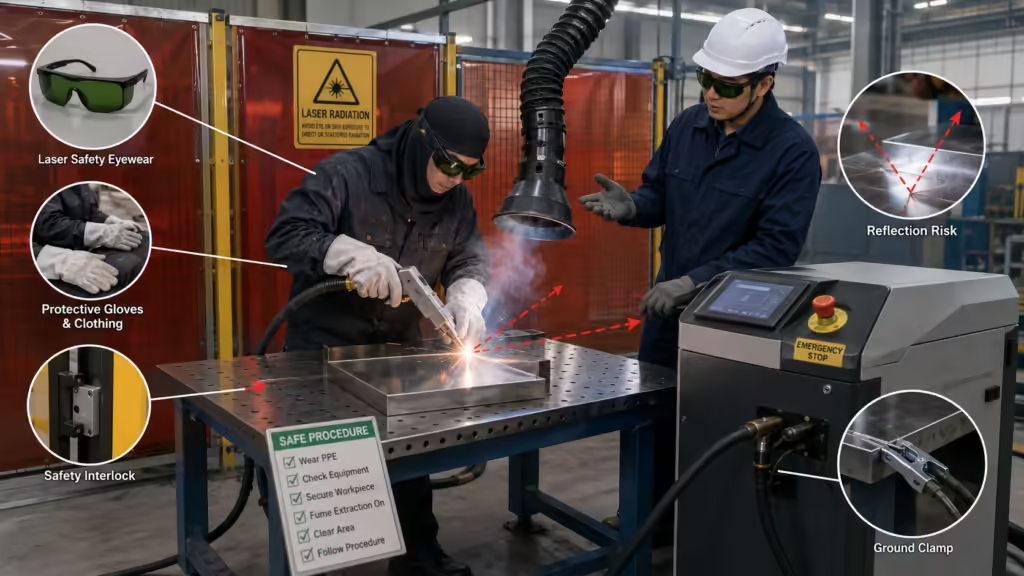
A laser welding machine requires serious safety planning. OSHA’s laser hazards overview states that laser exposure can damage the eye and skin, and that the eye is generally more vulnerable than skin under many conditions.
Buyers should check:
- laser safety eyewear matched to wavelength and power;
- controlled welding area;
- warning signs and barriers;
- fume extraction;
- operator training;
- emergency stop functions;
- ground clamp and safety interlocks;
- reflection risk from shiny metals.
How to Choose a Supplier and After-Sales Support
After-sales support can decide whether the machine becomes a productivity tool or a workshop headache.
Before buying, ask the supplier:
- Can they test your real materials?
- Do they provide parameter guidance?
- Are consumables available?
- Is remote support available?
- Is operator training included?
- Are videos and manuals clear?
- What warranty terms apply?
- How fast can spare parts ship?
- Can they help compare 1500W, 2000W, and 3000W options honestly?
A good supplier does not simply push the highest-power machine. They help match power, materials, speed, cooling, wire feeding, 3-in-1 functions, and ROI to your actual production.
خاتمة
A laser welding machine buying guide should not start with the biggest power rating. It should start with your materials, thickness range, welding goals, labor cost, safety requirements, and expected ROI.
A 1500W system may be enough for light sheet metal. A 2000W system may be the most flexible option for mixed fabrication. A 3000W system may be the right choice when thicker materials and higher output matter. The best decision is the one that matches your real production, not the one that looks strongest on paper.
التعليمات
What power laser welding machine should I buy?
Choose based on material type, normal thickness, welding speed, and production volume. 1500W suits many thin-sheet jobs, 2000W is a balanced option, and 3000W is better for thicker or higher-output work.
Is 2000W better than 1500W?
Not always. A 2000W machine gives more power reserve, but if your work is mostly thin stainless steel, 1500W may be more cost-effective.
When should I choose a 3000W laser welder?
Choose 3000W when you need stronger penetration, faster processing on suitable materials, or more capacity for thicker metal fabrication.