

Comment choisir la puissance laser adaptée à votre pièce : un guide complet
Table des matières
Dans le contexte de la fabrication au laser, l'une des décisions les plus importantes consiste à sélectionner la puissance laser appropriée à la pièce à usiner. Le niveau de puissance a un impact direct sur l'efficacité, la précision et la qualité du processus laser, qu'il s'agisse de découpe, de gravure, de soudage ou de marquage. Cet article propose un guide détaillé et scientifique pour déterminer le bon réglage en fonction du type de matériau, de son épaisseur et du résultat souhaité.
Qu'est-ce que la puissance laser ?
Puissance laser désigne la quantité d'énergie qu'un laser peut fournir dans un temps donné, généralement mesurée en watts (W) ou en kilowatts (kW). La puissance a un impact direct sur la capacité du laser à chauffer et à interagir avec une pièce, ce qui détermine la profondeur de la coupe, la précision de la gravure ou la force de la soudure.
Comprendre les facteurs qui influencent Puissance laser
Plusieurs facteurs influencent le processus de décision lors du choix d'une puissance laser. Les principaux aspects à prendre en compte sont les suivants :
- Type de matériau
- Epaisseur du matériau
- Qualité de coupe ou de soudure souhaitée
- Vitesse de coupe ou de soudage
- Spécifications de la machine
Examinons chacun de ces facteurs plus en détail.
1. le type de matériau
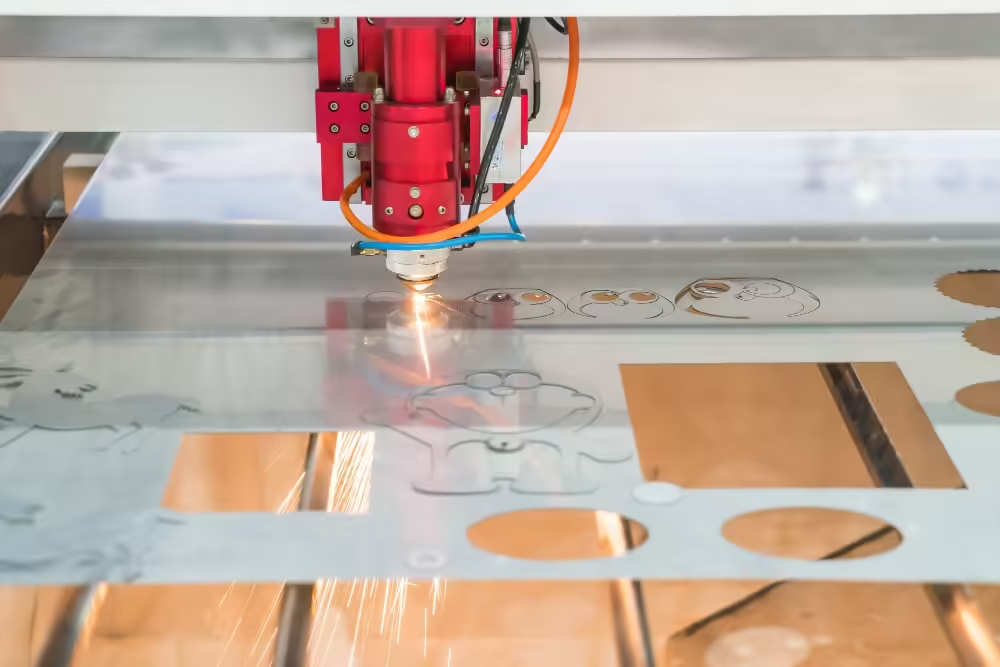
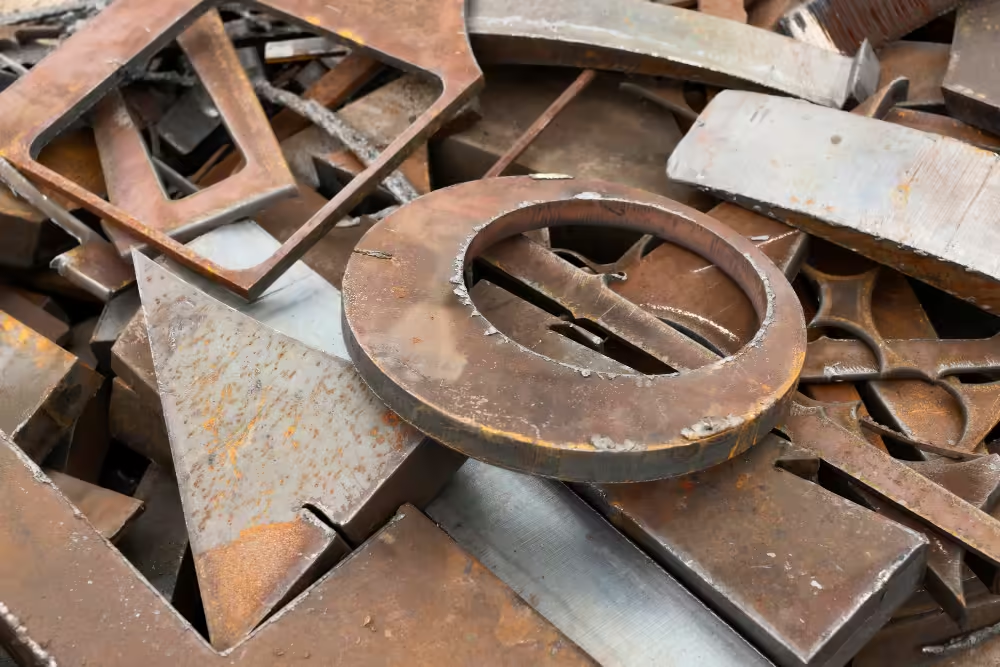
Différents matériaux interagissent avec l'énergie laser de manière distincte. Par exemple, les métaux, les plastiques et les céramiques ont tous des taux d'absorption différents de l'énergie laser. Pour sélectionner le niveau d'énergie approprié, il faut faire correspondre les exigences du matériau aux capacités du système laser.
- Les métaux (acier, aluminium, etc.) nécessitent généralement des niveaux de puissance plus élevés en raison de leur densité et de leur réflectivité.
- Les plastiques nécessitent des réglages de puissance modérés, car une puissance trop élevée peut faire fondre ou déformer le matériau.
- Les céramiques et le verre nécessitent des lasers spécialisés avec des niveaux de puissance plus faibles et un contrôle plus précis pour éviter les fissures ou les cassures.
2. l'épaisseur du matériau
L'épaisseur du matériau joue un rôle important dans la détermination de la puissance laser requise. Les matériaux plus épais absorbent plus d'énergie laser et nécessitent donc des réglages de puissance plus élevés. Voyons cela en détail :
| Epaisseur du matériau | Puissance laser requise |
|---|---|
| 1 mm (mince) | 50-100 W |
| 5 mm (moyenne) | 500 W - 1 kW |
| 10 mm (épais) | 2 kW - 4 kW |
Pour la découpe laser, l'augmentation de la puissance permet généralement d'obtenir des vitesses de traitement plus rapides et de découper des matériaux plus épais. Toutefois, une puissance excessive sur des matériaux fins peut entraîner des marques de brûlure ou des zones affectées par la chaleur (HAZ) excessives.
3. qualité de coupe ou de soudure souhaitée
La puissance du laser influe également sur la qualité de la découpe, de la soudure ou de la gravure. Une puissance élevée permet d'obtenir des vitesses de traitement plus rapides, mais la coupe peut devenir plus grossière ou moins précise. Pour obtenir des coupes plus nettes ou des détails plus complexes, il est généralement préférable d'opter pour une puissance modérée ou faible.
- Coupes de précision: Utilisez une puissance plus faible pour les matériaux fins qui nécessitent des bords nets et moins de déformation due à la chaleur.
- Traitement rapide: Une puissance plus élevée permet des coupes plus rapides, en particulier avec des matériaux épais, mais peut avoir une incidence sur la qualité des bords.
L'équilibre optimal entre la puissance du laser et la précision est essentiel pour maintenir des résultats de haute qualité.
4. vitesse de coupe ou de soudage
Vitesse et Puissance laser sont directement liés. Une puissance plus élevée permet de couper, de graver ou de souder plus rapidement, ce qui accroît l'efficacité, mais elle peut aussi nuire à la qualité si elle n'est pas correctement réglée. Tenez compte des besoins spécifiques de votre projet :
- Les applications à grande vitesse (par exemple, la production de masse) nécessitent généralement une puissance laser plus élevée pour un débit rapide.
- Les applications précises et à faible vitesse (par exemple, les gravures détaillées ou les découpes complexes) nécessitent généralement une puissance laser plus faible pour garantir des résultats de haute qualité.
5. Spécifications de la machine
Les capacités de la machine laser que vous utilisez détermineront également la puissance laser maximale disponible. Il est essentiel de choisir une machine laser dont la puissance est suffisante pour répondre à vos besoins, tout en veillant à ce qu'elle ne dépasse pas la tolérance du matériau à la chaleur.
Comment choisir le bon Puissance laser pour votre pièce
Au moment de faire ce choix crucial, il est important de prendre en considération tous les facteurs décrits ci-dessus. Voici un guide général pour différents secteurs d'activité :
1. découpe au laser :
- Métaux minces : 500 W - 1 kW
- Métaux moyens : 1 kW - 2 kW
- Métaux épais : 2 kW - 4 kW
2. soudage au laser :
- Faible puissance : Pour les matériaux minces avec une grande précision (500 W - 1 kW)
- Puissance élevée : Pour les matériaux plus épais et le soudage à grande vitesse (2 kW - 4 kW)
3. gravure au laser :
- Faible puissance : 10 W - 100 W pour une gravure détaillée sur le bois, les plastiques et les métaux fins.
4. marquage au laser :
- Puissance faible à moyenne : 10 W - 200 W pour le marquage des métaux, des plastiques et des céramiques.
Réflexions finales
En conclusion, le choix de la puissance laser appropriée est crucial pour obtenir des résultats optimaux pour votre pièce à usiner. Le type de matériau, son épaisseur, la qualité souhaitée et les capacités de la machine influencent tous les réglages de puissance nécessaires. En comprenant l'interaction de ces facteurs, vous pourrez prendre des décisions en connaissance de cause.
Si vous souhaitez mieux comprendre la technologie laser, vous pouvez cliquez ici pour obtenir plus d'informations sur les lasers.