

UV Laser Marking for Sensitive Electronic Components
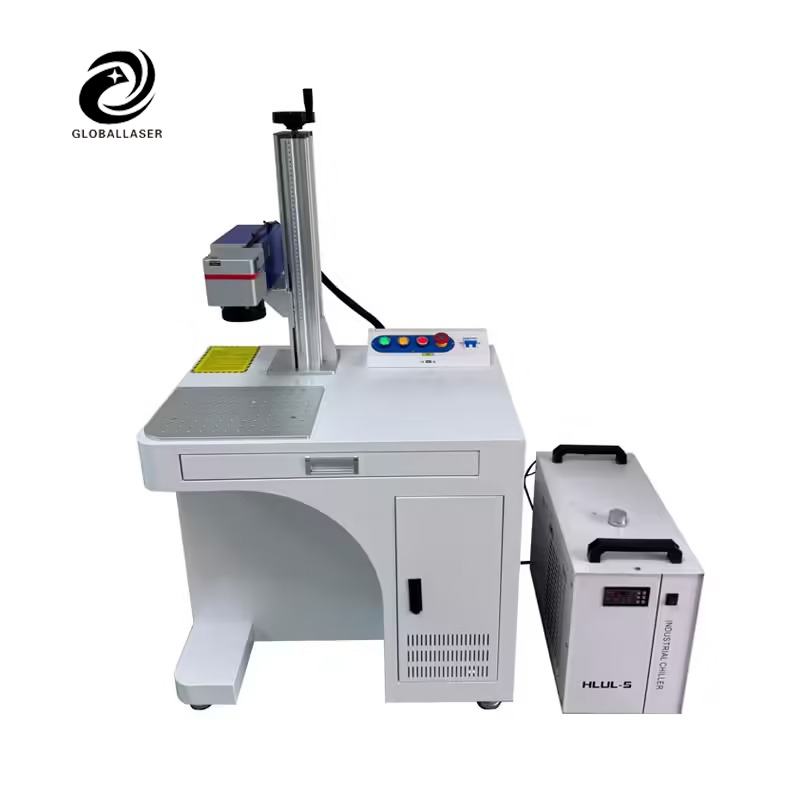
In the age of miniaturization and precision manufacturing, the need for ultra-fine, permanent marking on delicate materials has become more critical than ever. Electronic components, medical devices, and polymer-based materials require markings that are both precise and non-destructive. Traditional high-heat laser systems can easily damage or deform such materials, leading to costly rework or reduced product reliability.
This is where UV laser marking machines emerge as a game-changer. Known for their “cold marking” capability, they deliver exceptional precision without generating excessive heat. Let’s explore how UV laser technology enables high-quality marking for sensitive components — and why it’s increasingly favored across industries like electronics, medical devices, and microfabrication.
Table of Contents
What Is UV Laser Marking?
UV (ultraviolet) laser marking uses a short wavelength of 355 nm — significantly shorter than fiber (1064 nm) or CO₂ (10.6 µm) lasers. This shorter wavelength provides higher photon energy, which allows the laser to mark materials through a photochemical reaction rather than thermal ablation.
In simple terms, instead of “burning” or melting the surface, the UV laser breaks molecular bonds on the surface of the material, creating high-contrast, smooth, and damage-free marks. This makes it perfect for delicate and heat-sensitive materials.
Why UV Laser Marking Is Ideal for Sensitive Materials
Electronic components such as IC chips, connectors, PCB boards, and sensors often consist of fragile plastics, ceramics, or coated metals. Even minimal heat exposure can lead to warping, cracking, or changes in conductivity.
UV laser marking offers several decisive advantages in these scenarios:
- Minimal Heat Impact: The cold marking process prevents microcracks and thermal deformation.
- High Precision: Achieves micron-level marking accuracy suitable for microelectronics.
- Permanent and Clean Marks: Resistant to chemicals, wear, and temperature changes.
- No Consumables: No inks or additives — fully contactless and maintenance-free.
- Compatible with Multiple Materials: Works on plastics, glass, ceramics, silicone, and even sapphire.
Comparing Laser Types for Electronic Component Marking
Different laser technologies produce different effects depending on the wavelength and marking mechanism. Here’s a quick comparison between CO₂, Fiber, and UV laser systems:
| Laser Type | Wavelength | Suitable Materials | Heat Impact | Marking Precision | Typical Applications |
|---|---|---|---|---|---|
| CO₂ Laser | 10.6 µm | Non-metals (wood, paper, plastics) | High | Low | Packaging, engraving |
| Fiber Laser | 1064 nm | Metals, coated materials | Medium | High | Metal marking, tools |
| UV Laser | 355 nm | Sensitive plastics, glass, ceramics | Very Low | Very High | Electronics, medical devices |
This table clearly shows that UV lasers dominate in fields where low thermal impact and fine detail are critical.
UV Laser Applications in Electronics Manufacturing
The electronics industry relies heavily on precise and permanent component identification to ensure traceability, authenticity, and assembly accuracy. UV laser marking fulfills these needs across several product categories:
1. Printed Circuit Boards (PCBs)
UV lasers create fine alphanumeric codes, logos, and QR codes on the solder mask or substrate without damaging copper traces. This is essential for component tracking and automated inspection systems.
2. Integrated Circuits (ICs)
IC chips require marking areas smaller than 1 mm². UV lasers provide sharp, high-contrast marks that remain legible even after encapsulation or soldering.
3. Connectors and Sensors
Plastic connectors, fiber optic sensors, and micro-switches benefit from non-contact, low-energy marking that preserves mechanical and electrical integrity.
4. Medical and Optical Devices
UV laser marking ensures clean, sterile, and permanent identification on transparent or translucent materials such as glass syringes, lenses, and catheters — crucial for medical compliance.
The Technology Behind UV Laser Precision
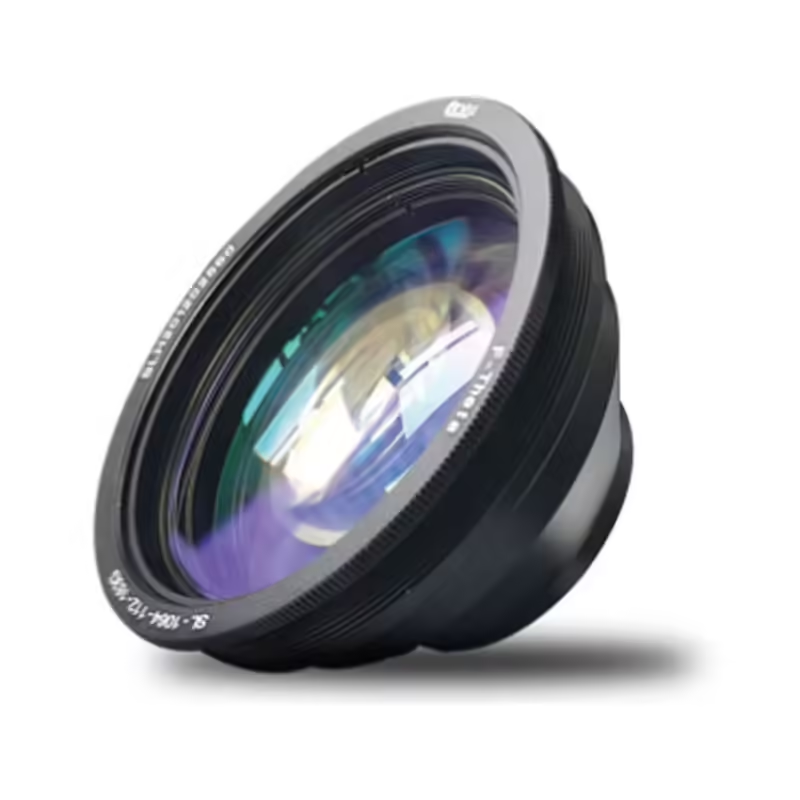
The superior marking quality of UV lasers stems from short pulse duration and tight beam focus. Typical UV lasers operate with pulse durations in the nanosecond range and can focus the beam to spot sizes below 20 µm.
This level of precision enables:
- Micron-scale text and barcodes even on reflective or curved surfaces.
- High contrast marking on transparent materials like glass or sapphire.
- Zero surface damage, ideal for marking functional components such as micro-sensors.
Furthermore, advanced UV laser systems can integrate with vision alignment cameras to automatically adjust the marking position, ensuring consistent quality across thousands of components.
Benefits of UV Laser Marking for Manufacturers
UV laser marking offers multiple benefits that extend beyond quality improvement.
1. Enhanced Product Traceability:
Clear, durable markings ensure that every component can be traced throughout the manufacturing and supply chain.
2. Cost Savings:
Eliminates consumables like inks and labels, and reduces rework due to damaged parts.
3. Environmental Safety:
No solvents, no smoke, and minimal waste — aligning with green manufacturing principles.
4. Compact System Design:
UV lasers are available in benchtop and inline configurations, making them easy to integrate into high-speed automated assembly lines.
5. Compliance with Industry Standards:
Supports ISO, RoHS, and CE requirements for permanent labeling and safety traceability.
Key Industries Benefiting from UV Laser Technology
- Electronics Manufacturing (ICs, PCBs, sensors)
- Medical Devices and Instruments
- Precision Optics and Micro-Lenses
- Automotive Electronics and Wiring Systems
- Smartphone and Wearable Device Components
Each of these sectors demands permanent, legible, and ultra-fine markings — all of which UV laser systems can deliver with unmatched consistency.
Conclusion
As products continue to shrink and material sensitivity increases, UV laser marking stands out as the perfect solution for precise, permanent, and damage-free marking.
For manufacturers of electronics, medical devices, and microcomponents, adopting UV laser technology means achieving consistent quality, improved traceability, and reduced operational costs — all while protecting delicate materials.
At SDGlobal, we design and deliver UV laser marking systems engineered for sensitive applications, ensuring your products remain both high-performing and traceable — without compromise.
FAQ
What makes UV laser marking different from fiber laser marking?
UV lasers use a much shorter wavelength (355 nm), which allows for non-thermal, “cold” marking suitable for sensitive materials. Fiber lasers, on the other hand, are better for metal marking.
Can UV lasers mark transparent materials like glass?
Yes. The high photon energy of UV lasers makes them ideal for marking glass and other transparent or translucent materials.
Do UV laser markings fade over time?
No. Marks are permanent and resistant to chemicals, sunlight, and abrasion — making them ideal for industrial and medical use.
Are UV laser marking machines environmentally friendly?
Absolutely. They require no ink, solvent, or consumables, producing no toxic waste and minimal power consumption.
What’s the lifespan of a UV laser source?
Typically over 20,000 to 30,000 hours of continuous use, depending on the system configuration and environment.