

Laser Welding Machine for Kitchenware Manufacturing: Cleaner Seams, Faster Output
Kitchenware manufacturing is no longer just about joining stainless steel parts. For sinks, cabinets, worktables, shelves, trolleys, and commercial kitchen equipment, the weld is often visible to the customer. A rough seam, heat discoloration, distortion, or heavy grinding mark can reduce product value and slow delivery.
A laser welding machine can help manufacturers create cleaner stainless steel seams, reduce post-weld polishing, and improve production speed when the product design, material fit-up, fixture, and operator training are well controlled. This article explains where laser welding fits, where it does not, and how kitchenware factories can evaluate it before upgrading production.
Оглавление
Why Kitchenware Manufacturing Needs Cleaner Weld Seams Now
Kitchenware buyers care about appearance because many stainless steel parts are exposed: sink corners, cabinet edges, worktable frames, appliance housings, food service counters, and visible panel joints.
For commercial kitchen equipment, appearance is not the only issue. Crevices, rough joints, and difficult-to-clean surfaces can affect hygiene and maintenance. The article on hygienic design of equipment in food processing explains that hygienic equipment design plays an important role in controlling microbiological safety and product quality.
That is why stainless steel kitchenware welding has become more demanding. Manufacturers need welds that look clean, hold reliably, and do not require excessive grinding before shipment.
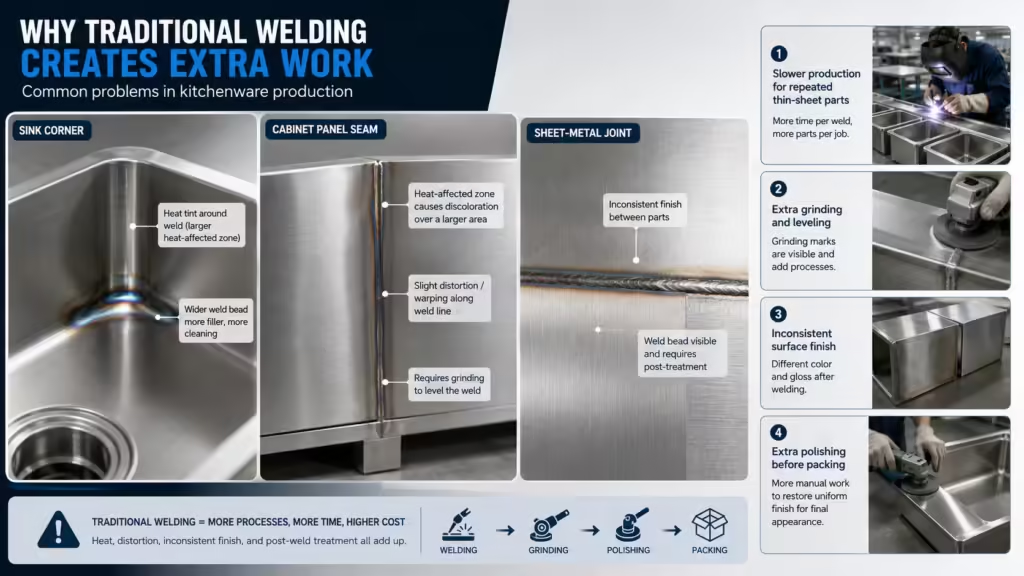
Where Traditional Welding Creates Extra Work
Traditional welding methods still have a place in kitchenware production. TIG welding is flexible and familiar. MIG welding can be useful for thicker structures. Resistance welding may suit certain sheet-metal joints.
The problem is that visible stainless steel parts often need more than strength. They need clean weld seams, low discoloration, and consistent appearance.
Common issues include:
- heat tint around the weld;
- wider bead appearance;
- sheet distortion;
- grinding marks;
- inconsistent finish between operators;
- slower speed on repeated thin-sheet parts;
- more polishing before final packing.
The TWI explanation of the heat affected zone describes the HAZ as a non-melted area that changes material properties after exposure to high temperatures. In kitchenware manufacturing, a larger heat-affected area often means more visual correction and more finishing work.
Как Лазерная сварочная машина Improves Stainless Steel Kitchenware Production
A laser welding machine uses a concentrated heat source. That is why it can create narrow welds, fast travel speeds, and lower heat input in many thin stainless steel applications.
TWI’s article on the benefits of using lasers for welding lists advantages such as speed and flexibility, deep narrow welds, low distortion, low heat input, and suitability for a range of materials. Those benefits match many kitchenware production needs.
For stainless steel sinks, cabinets, and commercial kitchen equipment, the practical value is:
1.Cleaner visible seams:Narrower welds can improve appearance on exposed corners and sheet edges.
2.Less post-weld polishing:In suitable joints, laser welding can reduce grinding and polishing work. It does not remove finishing in every case, but it can reduce the workload.
3.Lower distortion on thin stainless steel:Kitchenware parts often use thin sheets. Lower heat input can help reduce warping.
4.Faster production rhythm:Repeated sink seams, cabinet corners, and worktable joints can benefit from faster welding speed.
5.More stable appearance:With proper fixtures and parameters, production can become less dependent on manual bead shaping.
A 2024 review on modern laser beam welding processes also notes that laser beam welding benefits from precise heat input control and high power density, which helps explain its use in industrial production.
Stainless Steel Sinks, Cabinets, and Worktables: Where It Fits Best
Laser welding is especially useful when the part is stainless steel, visible, thin to medium thickness, and produced repeatedly.
| Kitchenware Product | Welding Need | Laser Welding Value |
|---|---|---|
| Stainless steel sinks | Smooth corners, low distortion | Cleaner sink seam welding |
| Kitchen cabinets | Visible edges and panels | Better appearance consistency |
| Worktables | Long straight joints | Faster stainless steel sheet metal welding |
| Commercial kitchen equipment | Clean surface and durability | Reduced rework and polishing |
| Trolleys and shelves | Tubes and sheet joints | Faster repeated welding |
| Appliance housings | Thin stainless sheet | Lower heat distortion risk |
For factories making stainless steel kitchenware in batches, the benefit is not only one beautiful seam. The larger benefit is a more predictable production flow: weld, inspect, polish less, and move faster to packing.
Why Reduced Post-Weld Polishing Matters
Polishing is often treated as a normal finishing step, but it can become a hidden cost center.
Every extra minute of grinding or polishing adds labor cost. It can also affect surface consistency. Over-polishing may leave visible marks, soften edges, or create uneven texture between parts.
For kitchenware manufacturers, reducing post-weld polishing helps in three ways:
- shorter delivery time;
- lower labor dependence;
- more consistent visible surface quality.
This is why laser welding for stainless steel kitchen equipment is not only a welding upgrade. It can be a workflow upgrade.
What Should Buyers Check Before Choosing a Laser Welding Machine?
A laser welding machine should be selected by product type, not only by power.
Before buying, kitchenware manufacturers should test:
- stainless steel thickness range;
- seam position and joint type;
- gap tolerance between parts;
- fixture accuracy;
- handheld or automated setup;
- wire feeding requirement;
- shielding gas setup;
- weld penetration;
- surface appearance after welding;
- polishing time after welding;
Is Laser Welding Always Better for Kitchenware Manufacturing?
No. Laser welding is powerful, but it is not magic.
It may not be the best choice when:
- part fit-up is poor;
- gaps are too large;
- surfaces are oily or contaminated;
- fixtures are weak;
- material is too thick for the selected power;
- operators are not trained;
- the shop has no laser safety control;
- the product requires a specific traditional weld bead appearance.
For kitchenware manufacturers, the best approach is sample testing. Weld real sink corners, cabinet panels, worktable legs, or commercial kitchen equipment parts before approving a machine.
Заключение
A laser welding machine can help kitchenware manufacturers move from “weld and polish later” to cleaner seams, faster production, and less rework. For stainless steel sinks, cabinets, worktables, and commercial kitchen equipment, the value comes from appearance control, lower heat distortion, reduced post-weld polishing, and smoother production flow.
The best result does not come from the laser alone. It comes from matching the laser welding machine with the right material thickness, joint design, fixture accuracy, operator training, and safety control.
ЧАСТО ЗАДАВАЕМЫЕ ВОПРОСЫ
Is laser welding suitable for stainless steel kitchenware?
Yes. It is suitable for many stainless steel kitchenware parts, especially thin sheets, visible seams, sinks, cabinets, worktables, and commercial kitchen equipment.
Can laser welding reduce polishing work?
Yes, in suitable applications. Laser welding can create cleaner and narrower seams, which may reduce grinding and polishing compared with some traditional methods.
Is laser welding better than TIG welding for kitchenware?
It depends on the part. TIG is flexible and familiar, while laser welding can be faster and cleaner for many repeated thin stainless steel parts.
What kitchenware products can use laser welding?
Common examples include stainless steel sinks, cabinets, worktables, shelves, trolleys, appliance housings, and commercial kitchen equipment.
Does laser welding work for food-grade stainless steel?
Yes, but manufacturers still need suitable stainless steel, shielding gas, cleaning, finishing, and hygiene-oriented design according to the final use.