

The Ultimate Laser Engraver Maintenance Guide: Expert Secrets to Lifespan Optimization
In the world of precision manufacturing, a laser engraver is not just a machine; it is a critical production asset. However, many workshops and factories find that after six months of operation, engraving edges start to char and cutting depths become inconsistent. This is rarely due to hardware quality—it is almost always the result of neglecting a rigorous Laser Engraver Maintenance Guide.
For B2B operations chasing high margins, unplanned downtime is a profit killer. If you want your equipment to perform like the day it left the factory and effectively reduce the frequency of consumable replacements, implementing a systematic Laser Engraver Maintenance Guide is imperative. This article dives deep into the professional secrets of lifespan management across three dimensions: optics, thermodynamics, and mechanical precision.
Оглавление
The Optical System: Protecting the “Vision” of Your Laser
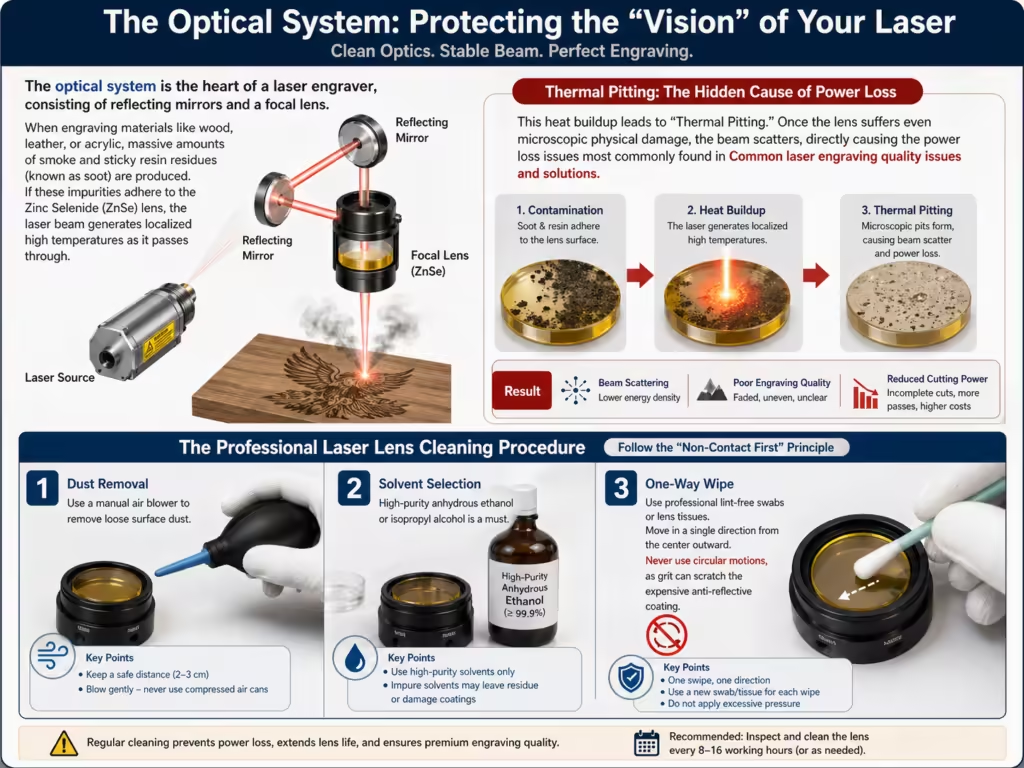
The optical system is the heart of a laser engraver, consisting of reflecting mirrors and a focal lens. When engraving materials like wood, leather, or acrylic, massive amounts of smoke and sticky resin residues (known as soot) are produced. If these impurities adhere to the Zinc Selenide (ZnSe) lens, the laser beam generates localized high temperatures as it passes through.
This heat buildup leads to “Thermal Pitting.” Once the lens suffers even microscopic physical damage, the beam scatters, directly causing the power loss issues most commonly found in Common laser engraving quality issues and solutions.
The Professional Laser lens cleaning procedure
A qualified Laser Engraver Maintenance Guide never permits the use of standard cleaning cloths. Cleaning optical components must follow the “Non-Contact First” principle:
1.Dust Removal: Use a manual air blower to remove loose surface dust.
2.Solvent Selection: High-purity anhydrous ethanol or isopropyl alcohol is a must.
3.One-Way Wipe: Use professional lint-free swabs or lens tissues. Move in a single direction from the center outward. Never use circular motions, as grit can scratch the expensive anti-reflective coating.
Reference: According to the technical standards of the Laser Institute of America (LIA), the cleanliness of optical components directly dictates the Beam Quality M² factor of high-power laser systems.
Thermal Management: Preventing “Thermal Death” of the Laser Tube
If you ask any veteran engineer How to extend CO2 laser tube lifespan, the first answer is always “Temperature.” The internal gas mixture of a CO2 laser tube is extremely sensitive to heat.
The Golden Rules of CO2 laser tube cooling
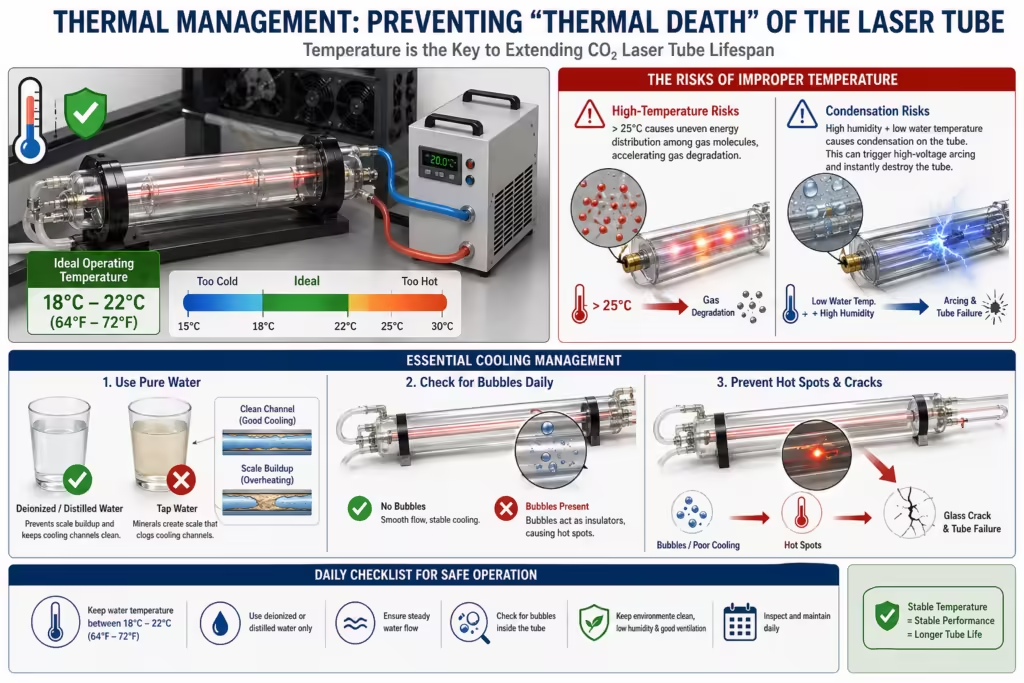
When executing this Laser Engraver Maintenance Guide, chiller management is paramount. The ideal operating temperature should be strictly controlled between 18°C and 22°C (64°F – 72°F).
- High-Temperature Risks: Exceeding 25°C causes uneven energy distribution among gas molecules, accelerating gas degradation.
- Condensation Risks: If ambient humidity is high and water temperature is too low, condensation forms on the outer wall of the tube, triggering high-voltage arcing, which can instantly destroy the entire tube.
Furthermore, because minerals in water create scale that clogs tiny cooling channels, this Laser Engraver Maintenance Guide mandates the use of deionized or distilled water. Checking for bubbles inside the tube is also a daily requirement; bubbles act as insulators, creating hot spots that cause the glass to crack under localized stress.
Mechanical Motion: The Battle Between Precision and Friction
Laser engravers typically perform rapid reciprocating motions. In this environment, smoke combines with the lubricant on the guide rails to form a substance similar to “grinding paste.” Without treatment according to the Laser Engraver Maintenance Guide, frictional resistance will increase exponentially.
Laser engraving precision maintenance
To maintain engraving precision, focus on these three points:
1.Rail Lubrication: Wipe away old oil weekly and apply light lithium grease.
2.Belt Tension: Over-tight belts strain motors; over-loose belts cause “Graphic Distortion,” such as circles becoming ovals.
3.Honeycomb Bed Cleaning: Neglected bed residue is a primary cause of back-flash fire hazards and smoke staining on workpieces.
Many laser engraving quality issues are not caused by the laser itself, but by mechanical motion problems such as friction, improper belt tension, and poor maintenance.
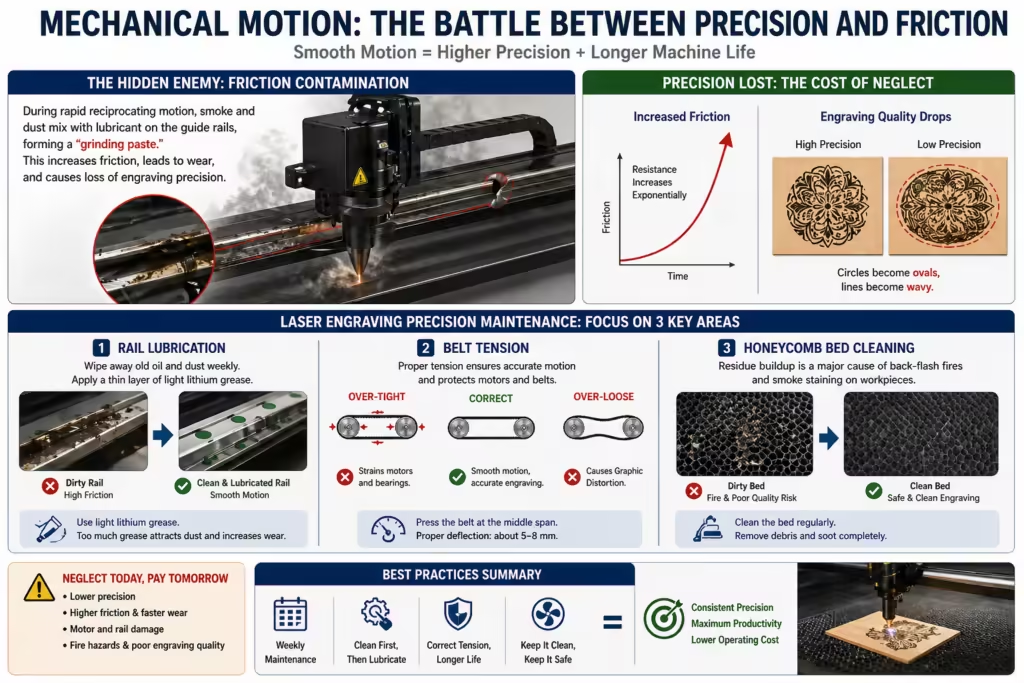
As shown in the diagram, friction contamination on guide rails increases resistance and reduces precision. Incorrect belt tension can distort graphics, while a dirty honeycomb bed can cause smoke staining and even fire hazards. Regular maintenance is critical for stable performance.
Environmental Protection: The Invisible Killer
A complete Laser Engraver Maintenance Guide must include the control of the external environment. Poor exhaust systems not only pollute workshop air but also cause soot to linger inside the machine, eventually penetrating sealed optical compartments.
For users focused on Maintaining laser engraver for high-speed acrylic cutting, the cleaning frequency of the exhaust fan should be doubled, as acrylic monomers condense into extremely sticky grease. Simultaneously, ensure the air assist compressor source is dry and oil-free, otherwise, moisture hitting a hot lens will cause immediate thermal shock and shattering.
Preventative Maintenance Checklist
For ease of execution, we have broken down the Laser Engraver Maintenance Guide into an actionable schedule:
| Frequency | Core Task | Expected Result |
| Daily | Laser lens cleaning procedure | Prevents residue ablation and ensures beam focus. |
| Daily | Check water temp & level | Ensures CO2 laser tube cooling system health. |
| Weekly | Rail & X/Y axis lubrication | Maintains Laser engraving precision maintenance. |
| Monthly | Optical path alignment check | Corrects beam deviation caused by long-term vibration. |
| Quarterly | Clean exhaust fan & air filters | Optimizes smoke removal and protects the optics. |
ROI: Maintenance is Profit
Many companies view executing this Laser Engraver Maintenance Guide as a waste of time. However, from a TCO (Total Cost of Ownership) perspective, every minute of preventative maintenance yields massive returns.
If a laser tube is worth $1,500, extending its life from 4,000 hours to 6,000 hours through good CO2 laser tube cooling management directly saves 50% in depreciation costs. More importantly, you avoid order delivery delays caused by downtime. In the competitive B2B market, reliability is your brand premium.
Заключение
Executing a professional Laser Engraver Maintenance Guide is the watershed between “hobbyists” and “professional manufacturers.” Through commitment to laser lens cleaning and precise control of CO2 laser tube cooling, you are not just protecting a machine—you are protecting your business continuity.
Don’t let neglected maintenance erode your profits. Strictly following this Laser Engraver Maintenance Guide is the most cost-effective way to guarantee precision and double your machine’s operational life.
ЧАСТО ЗАДАВАЕМЫЕ ВОПРОСЫ
Can I use alcohol prep pads to clean my lens?
Not recommended. Retail alcohol pads often contain water or other impurities. Strictly follow the Laser Engraver Maintenance Guide recommendation to use 99% purity anhydrous ethanol.
Why does my laser tube power weaken in winter?
If water temperature is too low, gas activity decreases. Ensure the water temperature is within the CO2 laser tube cooling recommendation of above 18°C.
How do I know if the lens needs replacing?
If, after a professional laser lens cleaning procedure, there are still visible black spots or coating peel on the surface, the lens is damaged and must be replaced.
How often should belts be replaced?
Check for cracks every 24 months. As long as you follow the Laser Engraver Maintenance Guide to keep rails lubricated, belt wear is significantly reduced.