

Laser Engraving Machine: Applications and Complete Buying Guide
Table of Contents
Introduction
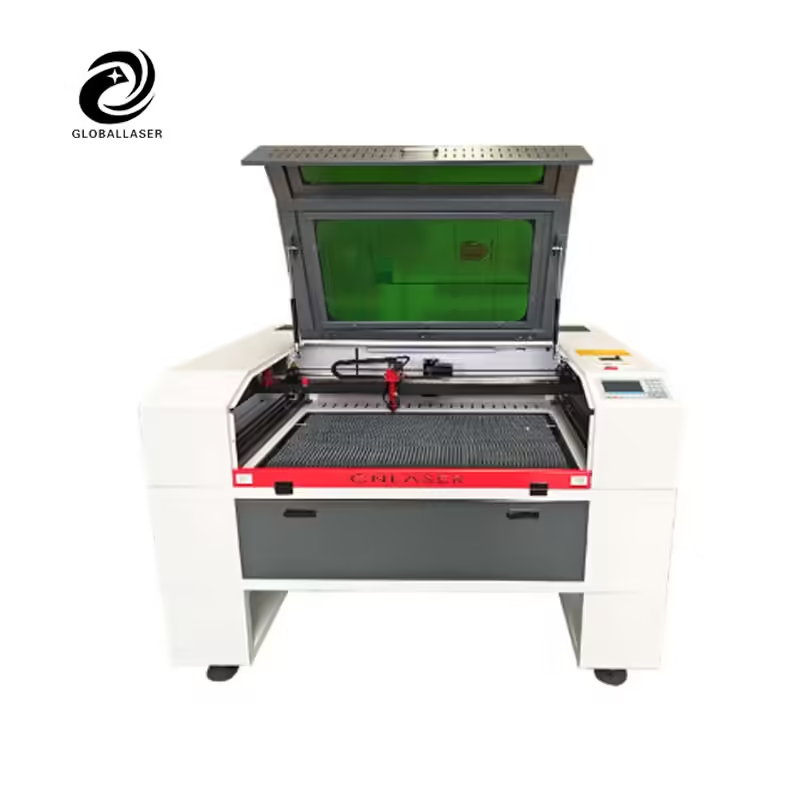
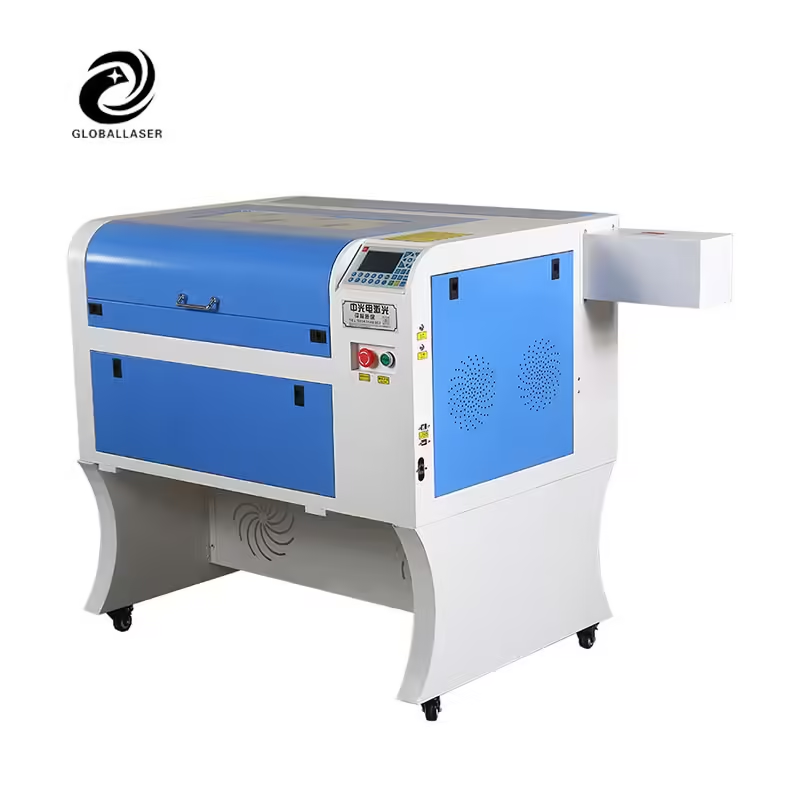
A laser engraving machine is a versatile and precise tool widely used across industries for marking, engraving, and personalizing materials. From leather and wood to acrylic and metals, laser engraving machines allow businesses, workshops, and hobbyists to create intricate designs, logos, and functional patterns with unparalleled accuracy. Whether you are producing signage, personalized gifts, awards, jewelry, or industrial components, understanding the capabilities and features of a laser engraving machine is essential for achieving optimal results.
Laser engraving is different from cutting: it removes material layer by layer without cutting completely through the substrate. This non-contact process ensures clean edges, preserves material integrity, and enables high-resolution detailing.
Advantages of Laser Engraving Machines
Laser engraving machines offer several advantages over traditional engraving techniques:
- Precision and Detail: Enables fine patterns and high-resolution designs.
- Versatility: Works on a wide range of materials including wood, acrylic, leather, glass, and metals.
- Consistency: Reproduces designs exactly across multiple items.
- Speed: Faster than hand engraving or mechanical methods.
- Non-Contact Process: Reduces wear on tools and avoids deformation of materials.
- Easy Customization: Designs can be modified digitally without re-tooling.
These features make laser engraving machines indispensable for small businesses, industrial production, and creative workshops.
Key Features to Consider When Choosing a Laser Engraving Machine
Laser Type and Power
Laser power and type determine which materials can be engraved effectively:
- CO₂ Lasers: Best for organic and non-metallic materials like wood, leather, acrylic, and paper.
- Fiber Lasers: Ideal for metals, plastics, and coated surfaces.
- UV Lasers: Suitable for delicate, heat-sensitive, or small objects, like electronics or glass.
Power settings affect engraving depth, speed, and clarity. Too much power may burn the material, while too little power may result in shallow or incomplete engravings.
Work Area
The work area must match your typical project size:
- Small work area: Suitable for jewelry, small plaques, or custom gifts.
- Medium work area: Ideal for signage, decorative panels, and mid-sized items.
- Large work area: Needed for industrial components, furniture panels, or large signage.
Motion System and Precision
High-quality linear rails and stepper or servo motors ensure smooth motion and repeatable results. Precision directly impacts the quality of fine details, especially on curved or intricate designs.
Software and File Compatibility
Laser engraving machines should support vector formats such as DXF, SVG, AI, and PDF. Advanced software features like layer control, speed/power adjustment, and batch processing increase efficiency and versatility.
Air Assist and Ventilation
Engraving produces smoke and debris, particularly with organic materials. Air assist helps remove debris from the engraving surface, while ventilation ensures operator safety and protects optics.
Typical Materials for Laser Engraving
| Material | Typical Thickness | Recommended Laser Type | Notes |
|---|---|---|---|
| Wood | 1–15 mm | CO₂ | Engraving reveals grain patterns; depth adjustable |
| Acrylic | 1–20 mm | CO₂ | Flame-polished edges achievable |
| Leather | 0.5–5 mm | CO₂ | Avoid high power to prevent burning |
| Glass | 2–10 mm | CO₂ / UV | Frosted engraving effect; non-contact process |
| Metals | 0.5–5 mm | Fiber | Shallow engraving or marking only |
| Stone | 1–20 mm | CO₂ | Surface marking; may require cooling |
Applications of Laser Engraving Machines
Custom Gifts and Personalization
Laser engraving is widely used for:
- Personalized jewelry, watches, and accessories
- Custom awards, plaques, and trophies
- Decorative items, keychains, and gifts
Industrial and Prototyping Applications
- Marking serial numbers, QR codes, and barcodes on products
- Creating prototypes for product testing
- Engraving parts and components for identification or functional design
Signage and Advertising
- Acrylic, wood, or metal signage
- Logo engraving for corporate branding
- Custom lettering for storefronts or exhibitions
Craftsmanship and Creative Projects
- Wood, leather, or acrylic arts
- Intricate designs for model-making or architectural panels
- Small-batch production for artisanal products
Best Practices for Laser Engraving
Material Preparation
Ensure the surface is clean, flat, and free from dust or moisture to prevent uneven engraving or marks.
Optimized Settings
Test small areas to determine the ideal speed, power, and passes. Settings vary with material type, thickness, and laser type.
Ventilation
Use a proper exhaust system and air assist to remove smoke and debris. This improves engraving clarity and protects the machine.
Post-Processing
Some materials, like wood or acrylic, may benefit from light sanding or cleaning to achieve a polished look.
Regular Maintenance
- Clean lenses and mirrors daily
- Inspect motion systems and belts weekly
- Check laser power and cooling system monthly
FAQ
What materials can a laser engraving machine handle?
It can engrave wood, acrylic, leather, glass, metals, and stone depending on the laser type and power.
Can beginners operate a laser engraving machine?
Yes, most modern machines include intuitive software and safety features, making them accessible to beginners.
Does laser engraving damage materials?
If properly configured, engraving is non-contact and preserves material integrity. Incorrect settings may burn or over-engrave surfaces.
What is the difference between laser engraving and cutting?
Engraving removes surface material without cutting through, while cutting passes entirely through the material.
Do I need special ventilation when engraving?
Yes. Fumes and debris are generated during engraving, requiring proper exhaust and air assist systems.
Ready to Upgrade Your Engraving Capabilities?
If you are unsure which laser engraving machine best suits your production scale, material types, or design requirements, our experts are ready to help. Contact us today for a personalized consultation to select a machine that delivers precision, efficiency, and long-term reliability. Don’t wait—enhance your engraving capabilities now and produce professional-quality results with ease!