

Laser Cleaning Machine Explained: Technology, Price and Industry Uses
Table of Contents
Industrial maintenance and surface preparation have long relied on sandblasting, chemical stripping, and mechanical grinding. While effective, these traditional approaches often create secondary waste, surface damage, and high labor costs.
Today, a Laser Cleaning Machine is redefining how industries approach rust removal, paint stripping, and precision surface treatment. From shipyards to automotive plants, this eco-friendly cleaning technology is gaining global momentum.
What Is a Laser Cleaning Machine?

A Laser Cleaning Machine is a surface treatment system that uses high-energy laser pulses to remove unwanted layers such as rust, oxides, oil, grease, and coatings without damaging the underlying substrate.
Unlike abrasive blasting, the process is non-contact and highly controllable. The laser energy is selectively absorbed by contaminants. When the contamination layer absorbs the laser pulse, it vaporizes or detaches due to rapid thermal expansion, while the base material remains intact.
laser cleaning works through a combination of thermal ablation, photomechanical effects, and controlled energy absorption, making it precise and repeatable.
This principle answers one of the most common questions: How does a laser cleaning machine work? The answer lies in selective energy interaction at the microscopic level.
For readers who prefer a visual explanation, the video below illustrates the working principle of a Laser Cleaning Machine step by step. From laser pulse emission to contaminant removal, it clearly shows how a rust removal laser separates corrosion from the metal surface without damaging the substrate. This demonstration helps bridge the gap between theory and real-world application.
What Can a Laser Cleaning Machine Do?
The applications of a Laser Cleaning Machine span multiple industries:
Rust Removal Laser Applications
As an industrial rust remover, it efficiently eliminates corrosion from steel structures, pipelines, and machinery without aggressive abrasion.
Paint Stripping Laser
It removes coatings prior to repainting, improving adhesion while avoiding chemical solvents.
Surface Preparation Equipment
In welding and bonding applications, clean metal surfaces are essential. Laser cleaning provides precise surface preparation equipment capabilities without altering tolerances.
Laser Cleaning for Automotive Industry
Used for weld seam preparation, battery tray cleaning, engine part restoration, and paint correction.
Laser Rust Removal Machine for Shipbuilding
Shipyards increasingly use laser systems to remove corrosion from decks and hull sections without producing tons of blasting grit waste.
Best Laser Cleaning Machine for Mold Cleaning
Injection molds and die casting molds benefit from non-contact cleaning that extends tool life and reduces downtime.
Handheld laser cleaning machine for sale models are especially popular for field maintenance and mobile repair teams.
Key Advantages of Laser Cleaning Machine Technology
1.Eco-Friendly Cleaning Technology
Unlike chemical stripping, laser cleaning produces minimal secondary waste. There are no chemical solvents, no abrasive media, and significantly reduced disposal costs.
2.Non-Contact and Low Damage
Because there is no mechanical friction, the Laser Cleaning Machine reduces the risk of surface deformation, especially on thin or precision components.
3.Precision and Control
Modern fiber laser cleaner systems allow fine adjustment of power, frequency, and scanning width, ensuring consistent results.
4.Reduced Downtime
Maintenance operations can often be performed in place, minimizing production interruptions.
How Laser Cleaning Is Changing Traditional Processing Methods
Historically, sandblasting dominated rust removal. However, sandblasting generates dust, requires heavy containment, and can damage delicate substrates.
Chemical stripping introduces environmental compliance challenges and worker safety concerns.
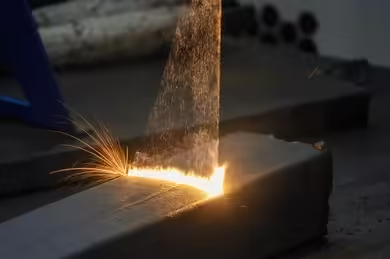
The emergence of the Laser Cleaning Machine is shifting many industries toward cleaner, more controlled solutions. In ship maintenance, localized laser rust removal reduces the need for large-scale blasting operations. In mold maintenance, laser systems replace manual scraping and abrasive cleaning.The transition reflects broader industry trends toward sustainability and automation.
Market Growth and Industry Outlook
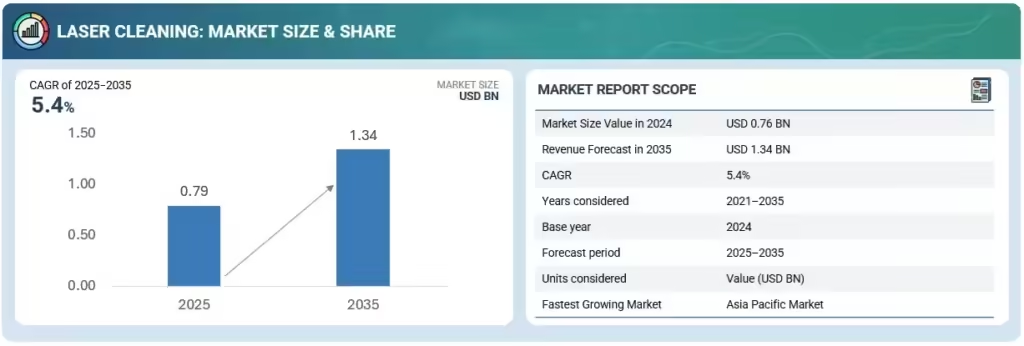
Growth is particularly strong in:
- Automotive manufacturing
- Shipbuilding and marine repair
- Aerospace maintenance
- Heavy equipment manufacturing
- Energy and infrastructure
The Laser Cleaning Machine is increasingly viewed as a long-term capital investment rather than a niche tool.
Why Laser Cleaning Beats Traditional Methods
When comparing laser systems with conventional approaches:
| Factor | Laser Cleaning | Sandblasting | Chemical Stripping |
|---|---|---|---|
| Waste Generation | Minimal | High | Chemical waste |
| Surface Damage | Very low | Moderate to high | Low |
| Environmental Impact | Low | Dust pollution | Toxic chemicals |
| Automation Potential | High | Limited | Limited |
For companies aiming to meet ESG goals and environmental regulations, the Laser Cleaning Machine offers a clear advantage.
Laser Cleaning Machine Cost and Price Considerations
One of the most searched topics is Laser cleaning machine cost and Laser cleaning machine price.
Prices vary depending on:
- Power output (100W–2000W+)
- Fiber laser cleaner configuration
- andheld vs automated systems
- Cooling systems
- Safety enclosure and dust extraction integration
Entry-level handheld laser cleaning machine for sale models may start around $8,000–$15,000, while industrial automation systems can exceed $100,000.
However, evaluating cost purely on purchase price is misleading. Total cost of ownership includes:
- Maintenance
- Energy consumption
- Labor savings
- Consumables reduction
- Waste disposal savings
ROI of Laser Cleaning Business
Calculating the ROI of laser cleaning business operations requires analyzing:
1.Replacement of abrasive media costs
2.Reduced chemical purchases
3.Lower waste disposal fees
4.Reduced labor hours
5.Extended tool lifespan
6.Increased productivity
For high-volume operations such as shipyards or mold maintenance workshops, payback periods may range from 1–3 years depending on utilization rate.
In service-based models, mobile rust removal laser services can create new revenue streams.
Choosing the Right Laser Cleaning Machine
1.Determine Application Scope
Is it precision mold cleaning or large-scale structural rust removal?
2.Power Selection
Higher power improves speed but increases investment.
3.Fiber vs Other Laser Types
Fiber laser cleaner systems are commonly preferred for metal cleaning due to efficiency and durability.
4.Automation Needs
Robotic integration may be necessary for high-volume production.
5.Safety and Compliance
Ensure proper fume extraction and laser safety systems are included.
Choosing correctly ensures maximum performance and long-term profitability.
Frequently Asked Questions
How does a laser cleaning machine work without damaging metal?
It uses controlled energy absorption where contaminants absorb laser pulses more readily than the base metal, causing selective removal.
Is laser cleaning suitable for large surfaces?
Yes, especially with higher-power systems or automated scanning platforms.
Is it safe?
With proper safety enclosure and extraction systems, it is considered safer than chemical stripping.
What industries benefit the most?
Automotive, shipbuilding, aerospace, heavy machinery, and mold manufacturing see strong adoption rates.