

Fiber vs CO2 Laser Engraving: Which Technology is Best for Your Business?
When selecting the right technology for engraving, businesses often face the crucial decision between Fiber vs CO2 Laser Engraving. These two laser technologies cater to different materials and industries, each offering distinct advantages. In this article, we’ll explore the differences between fiber vs CO2 laser engraving, discussing which technology is best for engraving metal and non-metal materials.
Table of Contents
The Principle Behind Fiber vs CO2 Laser Engraving
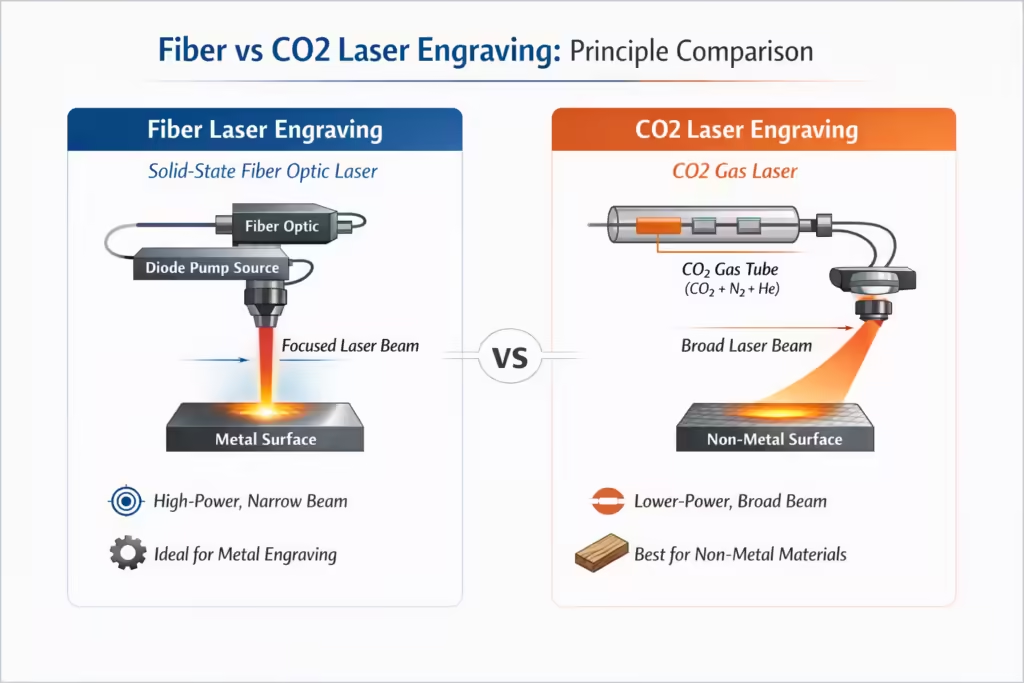
The core difference between fiber vs CO2 laser engraving lies in how the laser beam is generated and focused. Fiber laser engraving uses a solid-state fiber optic laser, which is more efficient at producing a narrow and powerful beam. This allows for faster engraving speeds and higher precision, especially on metals. In contrast, CO2 laser engraving uses a gas mixture of carbon dioxide to create the laser, which is best suited for non-metals like wood, acrylic, and leather. The beam from a CO2 laser is generally broader and has less power compared to fiber lasers, making it ideal for engraving softer materials at a lower cost.
Fiber Laser Engraving for Metal
Fiber laser engraving is specifically designed for engraving metals. With a solid-state fiber laser, fiber vs CO2 laser engraving comes down to efficiency, speed, and precision, especially when working with metal materials. Fiber lasers are ideal for engraving materials like stainless steel, aluminum, brass, and titanium, and they offer superior results when compared to CO2 lasers for metal engraving.
The advantages of fiber laser engraving for metal include:
- Precision: Fiber lasers provide much finer engravings compared to CO2 lasers, especially for intricate designs on metals.
- Speed: Fiber laser engraving processes metal faster than CO2 lasers, making them more suitable for industrial applications.
- Durability: Fiber lasers are known for their long lifespan, with minimal maintenance required.
Given these benefits, fiber laser engraving is often the preferred choice for metal applications in aerospace, automotive, and electronics industries.
CO2 Laser Engraving for Non-Metal Materials
In contrast, CO2 laser engraving excels with non-metal materials like wood, acrylic, leather, and glass. Unlike fiber laser engraving, CO2 lasers use a gas mixture to create the laser beam, which is more effective for engraving softer materials.
The benefits of CO2 laser engraving for non-metal materials include:
- Versatility: CO2 lasers can engrave a variety of non-metal materials, from wood to plastic and glass, offering flexibility for businesses in the crafting and signage industries.
- Cost Efficiency: The initial cost of CO2 laser engraving machines is generally lower than fiber laser engraving machines, making them a more affordable option for small businesses.
- Ease of Use: CO2 laser engraving machines are user-friendly, making them easier to operate for beginners compared to fiber laser engraving systems.
CO2 lasers are commonly used for applications like custom engraving, sign production, and small-scale craft manufacturing.
Fiber vs CO2 Laser Engraving: A Comparison
| Feature | Fiber Laser Engraving | CO2 Laser Engraving |
|---|---|---|
| Best for | Metals (e.g., stainless steel, aluminum) | Non-metals (e.g., wood, acrylic) |
| Precision | High precision, fine details | Good precision, but lower than fiber lasers |
| Speed | Faster processing for metals | Slower than fiber lasers |
| Maintenance | Low maintenance, long lifespan | Moderate maintenance |
| Cost | Higher initial cost | Lower initial cost |
As you can see from the table, fiber laser engraving stands out when it comes to precision and speed for metal engraving, while CO2 laser engraving is the more affordable option for non-metal materials.
To better understand the differences in Fiber vs CO2 Laser Engraving, watch the video below for a visual breakdown of how each technology works in real-world applications.
Choosing the Right Laser Engraving Machine for Your Needs
Now that we’ve discussed the differences between fiber vs CO2 laser engraving, the next step is to choose the right machine for your business. The decision ultimately depends on the materials you plan to engrave.
If your focus is on engraving metals like stainless steel or aluminum, fiber laser engraving will be your best option. With its precision, speed, and durability, fiber laser engraving is tailored to handle tough materials with ease.
On the other hand, if you mostly work with non-metal materials such as wood, plastic, or leather, CO2 laser engraving provides the versatility and affordability that many small businesses need. The lower initial cost of CO2 laser engraving machines makes them more accessible to those just starting out in the engraving business.
Conclusion
To sum up, the debate of Fiber vs CO2 Laser Engraving ultimately boils down to your business’s specific needs. Fiber laser engraving is best suited for engraving metals, offering speed, precision, and durability. In contrast, CO2 laser engraving is more versatile and affordable, making it a great option for engraving non-metal materials. By understanding the differences between fiber vs CO2 laser engraving, you can make an informed decision that will help streamline your engraving processes and maximize your investment.
FAQ
What materials can I engrave with a fiber laser?
Fiber laser engraving is ideal for metals like stainless steel, aluminum, brass, and titanium. It offers high precision and fast processing for these materials.
Can a CO2 laser engrave metal?
While CO2 laser engraving can engrave some metals, fiber lasers are generally much more effective for metal engraving due to their higher precision and speed.
Which laser engraving machine is best for a small business?
For small businesses that focus on non-metal materials, a CO2 laser engraving machine is typically a more affordable and versatile choice.
How much does a fiber laser engraving machine cost?
Fiber laser engraving machines tend to be more expensive than CO2 lasers, with prices typically ranging from a few thousand to tens of thousands of dollars.
How do I maintain a fiber laser engraving machine?
Fiber lasers require minimal maintenance, primarily cleaning the lens and ensuring proper cooling systems are in place.