

Fiber Laser Marking for Faster Cable Tray Production
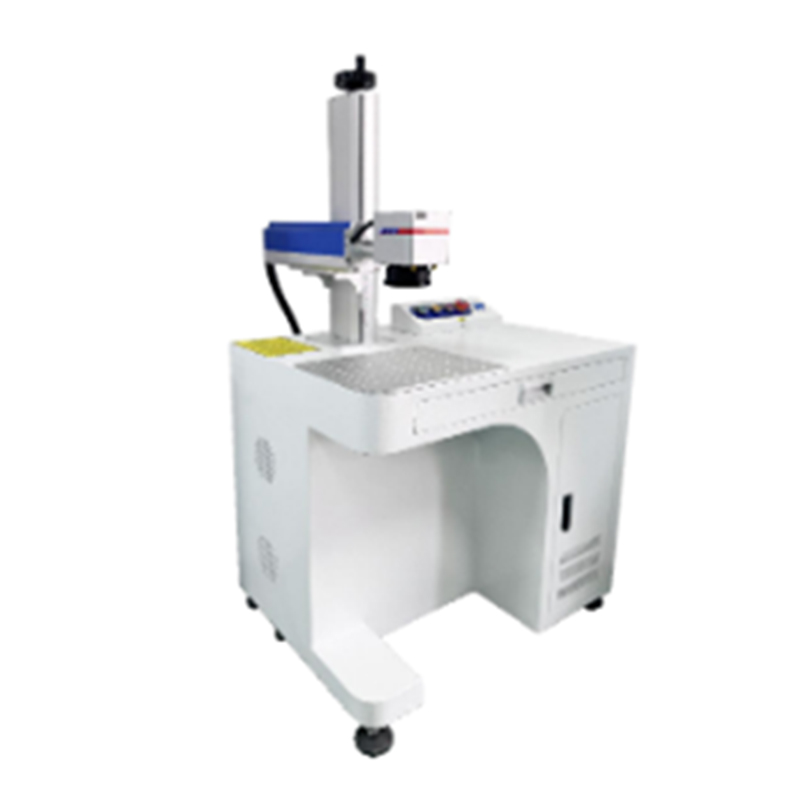
In industrial production, efficiency and quality are the two main pillars that determine a company’s competitiveness. In the cable tray manufacturing industry, these two goals are often challenged by the need for precise identification, fast processing, and long-term durability of markings. Traditional marking methods like inkjet or mechanical engraving often fail to deliver permanent, high-resolution results under harsh conditions.
Fiber laser marking machines have completely transformed this landscape. By combining high-speed precision with permanent marking quality, they have become the go-to solution for manufacturers seeking reliability and scalability. This article explores how fiber laser marking technology enhances both speed and durability in cable tray production — and why it’s the best investment for modern industrial marking.
Table of Contents
Understanding Cable Tray Manufacturing Needs
Cable trays are essential components used for routing and protecting electrical cables in industrial, commercial, and construction projects. These trays are typically made of stainless steel, aluminum, or galvanized iron, all of which require permanent labeling for identification, traceability, and compliance with safety standards.
The labeling on cable trays usually includes:
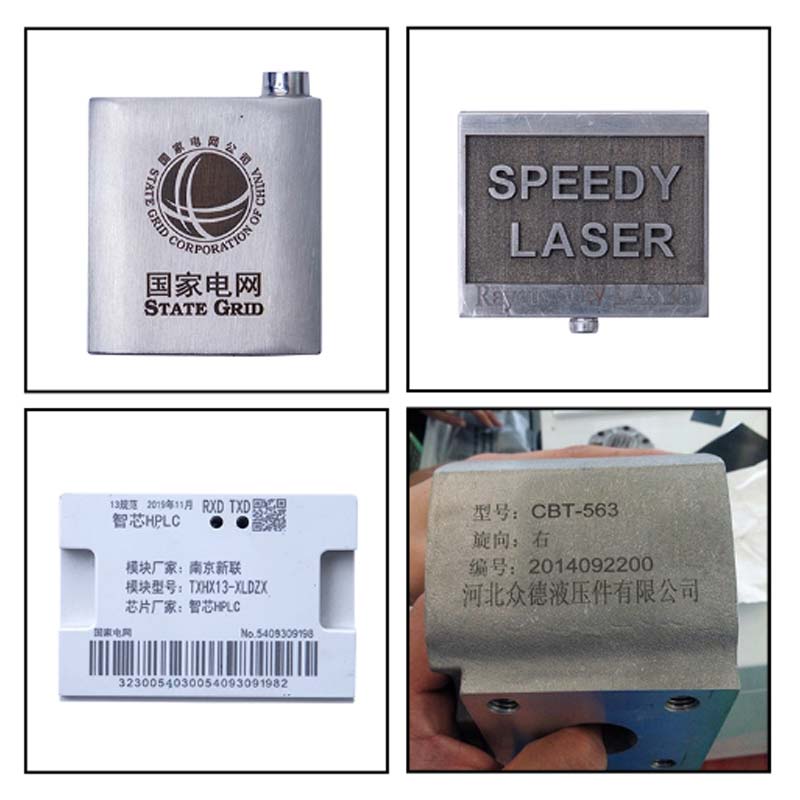
- Manufacturer’s logo and name
- Product size and specifications
- Batch number and serial code
- Safety or certification information
In high-volume production lines, these markings must be applied rapidly and must withstand abrasion, corrosion, heat, and outdoor environments. This is where fiber laser marking excels.
Why Fiber Laser Marking Is Ideal for Metal Cable Trays
Fiber laser marking machines use a solid-state laser source that emits a wavelength of 1064 nm, which interacts exceptionally well with metallic surfaces. Unlike CO₂ lasers, which are better suited for non-metals, fiber lasers deliver deep, high-contrast marks on metals without requiring additional coatings or consumables.
Core Advantages of Fiber Laser Marking for Cable Tray Manufacturers
- High-Speed Processing: Capable of marking thousands of trays per day with consistent quality.
- Permanent and Wear-Resistant Marks: Resistant to corrosion, heat, and UV exposure.
- Maintenance-Free Operation: No ink, no chemicals, no downtime for replacement parts.
- Precision and Flexibility: Perfect for logos, QR codes, serial numbers, and barcodes.
- Environmentally Friendly: 100% contact-free and chemical-free marking process.
Comparing Marking Methods in Cable Tray Production
To understand the advantages of fiber laser marking, let’s compare it with other marking techniques commonly used in metal processing.
| Marking Method | Speed | Durability | Maintenance | Consumables | Overall Efficiency |
|---|---|---|---|---|---|
| Inkjet Printing | Fast | Low – fades over time | High | Ink cartridges | Moderate |
| Mechanical Engraving | Slow | High | Frequent tool wear | Cutting tools | Low |
| Etching (Chemical) | Medium | Medium | Hazardous waste handling | Chemicals | Moderate |
| Fiber Laser Marking | Very Fast | Very High | Minimal | None | Excellent |
From this comparison, it’s clear that fiber laser marking offers the best balance between speed, quality, and operational efficiency.
The Technology Behind Fiber Laser Marking
Fiber lasers work by channeling light through a doped optical fiber to generate a concentrated, high-energy beam. This beam is then focused onto the metal surface by a galvo scanning system that rapidly moves the laser across the target area.
Depending on the power and pulse duration, the laser can produce different effects such as:
- Annealing (color change without surface removal)
- Etching (light surface removal for contrast)
- Deep Engraving (permanent, tactile marks)
This versatility allows manufacturers to tailor the marking depth and contrast according to customer or regulatory requirements.
How Laser Marking Improves Production Speed
Traditional methods often require manual alignment or drying time, which slows down production. Fiber laser systems eliminate these bottlenecks. Here’s how they accelerate workflow:
- Instant Marking: The laser starts marking immediately — no warm-up or material prep.
- Automated Workflow Integration: Easily integrated with conveyor belts and robotic arms.
- High Repetition Rate: Continuous marking at up to 7000 mm/s scanning speed.
- Minimal Downtime: No consumables or maintenance interruptions.
For cable tray manufacturers operating multiple production lines, these time savings translate directly into higher throughput and lower unit costs.
Enhancing Durability Through Permanent Marking
Durability is critical for cable trays used in industrial and outdoor environments. Exposure to heat, humidity, or chemical corrosion can cause printed or painted marks to quickly degrade. Fiber laser marking, however, produces a permanent alteration in the material’s surface, ensuring the mark remains visible for years.
- Corrosion Resistant: Ideal for stainless steel and galvanized trays used in chemical plants or offshore facilities.
- Heat Resistant: Marks remain intact even under high-temperature operation.
- UV Stable: Unlike inks or labels, laser marks do not fade when exposed to sunlight.
This ensures compliance with ISO traceability and safety labeling standards while maintaining a clean and professional product appearance.
Integrating Fiber Laser Marking into Modern Cable Tray Lines
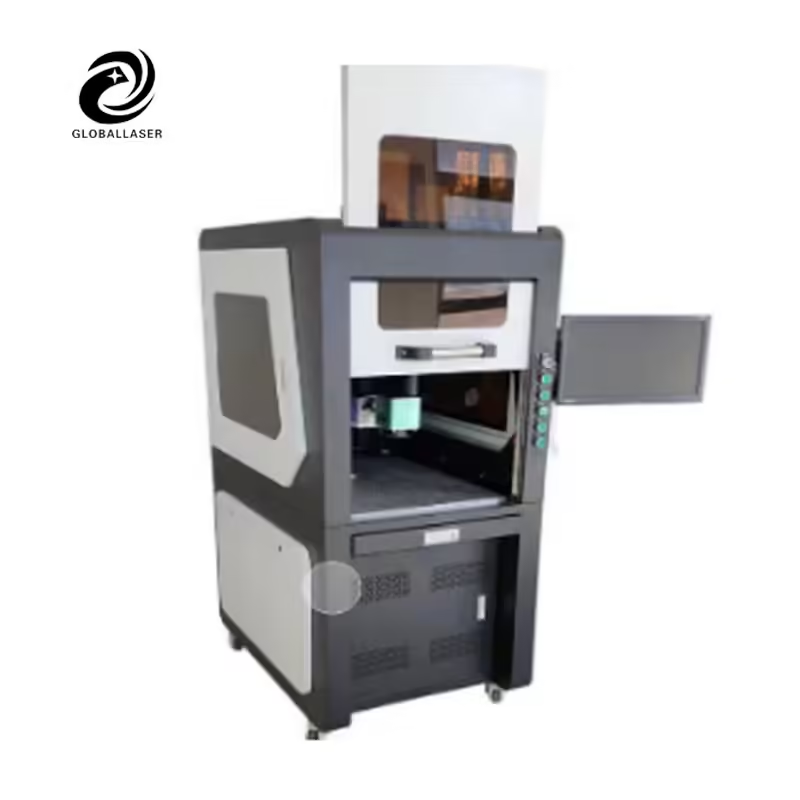
Modern cable tray factories are embracing automation, and fiber laser systems fit perfectly into Industry 4.0 workflows. They can be:
- Mounted on robotic arms for dynamic marking
- Linked with PLC control systems for automatic data updates
- Integrated with cameras for vision alignment and inspection
These integrations allow for error-free operation, reduce manual labor, and improve marking precision across every batch.
Economic Benefits for Manufacturers
While the initial investment for a fiber laser marking machine may be higher than traditional methods, the long-term benefits far outweigh the cost.
Return on Investment Highlights:
- Zero consumables: No ink, solvents, or stencil costs.
- Low maintenance: Minimal spare parts and cleaning.
- Faster production cycles: More trays produced per shift.
- Brand quality boost: Permanent, aesthetic markings improve brand perception.
The result is a higher production output with lower long-term operational expenses.
Conclusion
Fiber laser marking is more than just a marking solution — it’s an enabler of manufacturing innovation. For cable tray producers aiming to improve efficiency, quality, and traceability, adopting fiber laser technology represents a future-proof investment.
By delivering faster production, permanent marking, and reduced costs, fiber laser systems empower manufacturers to meet global demand with precision and confidence.
If your company is ready to upgrade to smarter marking solutions, SDGlobal offers fully customized fiber laser marking systems designed for the cable tray industry — engineered for speed, durability, and industrial excellence.
FAQ
What materials can fiber laser marking machines handle in cable tray production?
They can mark on stainless steel, aluminum, galvanized iron, and even coated metals — ideal for all cable tray types.
How fast can fiber lasers mark on metal trays?
With a galvo scanning system, marking speeds can reach 7000 mm/s, allowing for hundreds of trays per hour.
Are fiber laser marks resistant to corrosion and heat?
Yes. The marks are physically bonded to the metal surface, making them resistant to abrasion, oxidation, and high temperature.
Can I integrate a laser marking system with my existing production line?
Absolutely. Modern fiber lasers support communication with PLC systems and can be synchronized with conveyor belts or robotic arms.
What is the lifespan of a fiber laser source?
Typically over 100,000 hours of operation — more than a decade of continuous use with minimal maintenance.