

Laser Welding Machine Parameters for Buyers: What to Ask Before Ordering
Many buyers start a laser welding machine inquiry with only one question: “What is the price?”
However, the price of a laser welder depends on much more than the machine model. The correct equipment selection requires information about the material, thickness, welding speed, joint design, shielding gas, wire feeding requirements, and expected production conditions.
Understanding laser welding machine parameters before ordering helps buyers avoid choosing a machine that cannot achieve the required penetration, welding appearance, or production efficiency.
This guide explains which specifications buyers should confirm with suppliers and what information should be prepared before requesting a quotation.
Table of Contents
Why Can’t Buyers Choose a Laser Welding Machine by Power Alone?
Laser power is usually the first specification buyers notice. A 1000W, 1500W, or 2000W laser welding machine may appear to be the main factor deciding welding capability, but power alone does not determine the final result.
The actual welding performance depends on the relationship between:
- laser power
- material type
- material thickness
- welding speed
- focus position
- joint structure
- shielding gas protection
For example, stainless steel and aluminum may require different welding conditions even when both materials have the same thickness.
A higher-power laser does not automatically create better welds. Excessive energy input can increase:
- heat affected zones
- distortion risk
- surface defects
while insufficient power may cause:
- incomplete penetration
- weak weld joints
- unstable welding quality
According to the Laser Institute of America’s explanation of laser materials processing, laser processing results depend on controlling multiple process variables, not only the laser source output.
For buyers, the first question should not be:
“How many watts is the machine?”
It should be:
“What welding condition does my application require?”
What Material and Thickness Information Should Buyers Provide First?
Before discussing machine specifications, buyers should prepare the basic welding information.
The two most important factors are:
Material Type
Different metals absorb and conduct laser energy differently.
Common laser welding materials include:
- stainless steel
- carbon steel
- aluminum
- galvanized steel
- copper alloys
For example:
Stainless steel generally has stable laser welding performance because of its balanced thermal properties.
Aluminum requires more attention because of its higher reflectivity and thermal conductivity.
Copper can be more challenging because it reflects a large amount of laser energy, requiring suitable process adjustment.
According to The American Welding Society (AWS) welding resources, welding procedures must consider material properties, joint design, and process conditions to achieve consistent results.
This means suppliers need material information before recommending a suitable laser welder.
Material Thickness
Thickness directly influences:
- required laser power
- penetration depth
- welding speed
- heat input
A buyer welding 1 mm stainless steel sheets has completely different requirements from a manufacturer welding 8 mm steel structures.
Before ordering, buyers should provide:
- minimum thickness
- maximum thickness
- average production thickness
This information helps suppliers recommend suitable laser welding machine specifications instead of simply offering a higher-power machine.
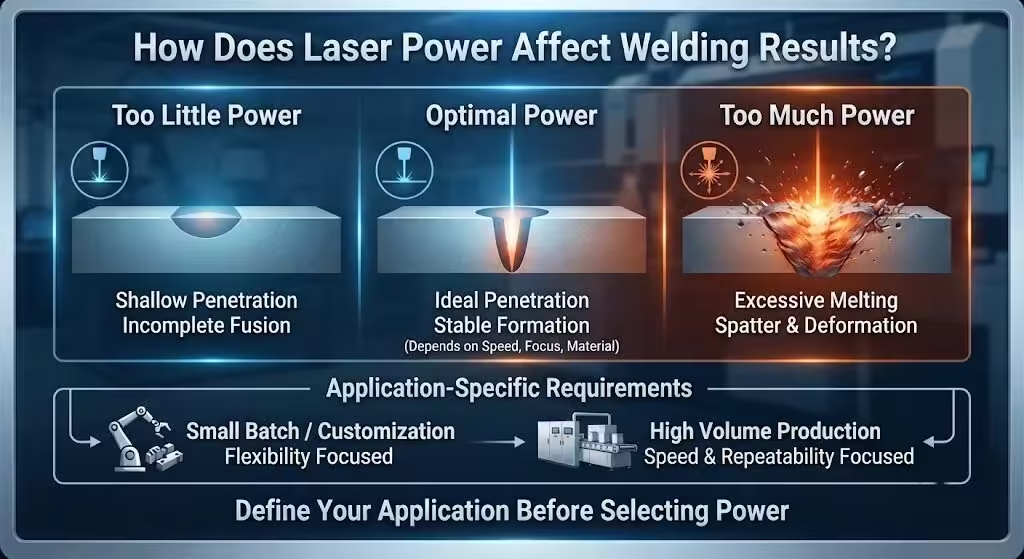
How Does Laser Power Affect Welding Results?
Among all laser welding parameters buyers should ask, laser power is one of the most important, but it must be evaluated together with other conditions.
Laser power affects:
Penetration Depth
Higher power can increase penetration capability, which is important for thicker materials.
However, penetration also depends on:
- focus position
- welding speed
- material properties
Welding Stability
Incorrect power settings may create unstable weld formation.
Too much energy can cause:
- excessive melting
- spatter
- deformation
Too little energy can cause:
- shallow penetration
- incomplete fusion
Production Requirements
A manufacturer producing small batches may not need the same power level as a factory running continuous production.
For example:
A workshop producing customized stainless steel parts may prioritize flexibility.
A production line manufacturing metal cabinets may focus more on stable speed and repeatability.
This is why buyers should define their application before selecting power.
What Should Buyers Know About Laser Welding Speed?
Many buyers focus on laser power but overlook welding speed, which directly affects production output.
Welding speed determines:
- how quickly parts can be processed
- heat input per welding area
- overall production capacity
A higher welding speed is not always better.
If speed is too high:
- penetration may decrease
- weld appearance may become inconsistent
If speed is too low:
- production time increases
- excessive heat may affect the material
When preparing a laser welder specification checklist, buyers should provide:
- expected welding length per day
- production quantity
- manual or automated operation
- required welding appearance
For example:
A manufacturer producing hundreds of identical components may need different settings from a company repairing occasional metal parts.
Why Does Focus Position Matter in Laser Welding?
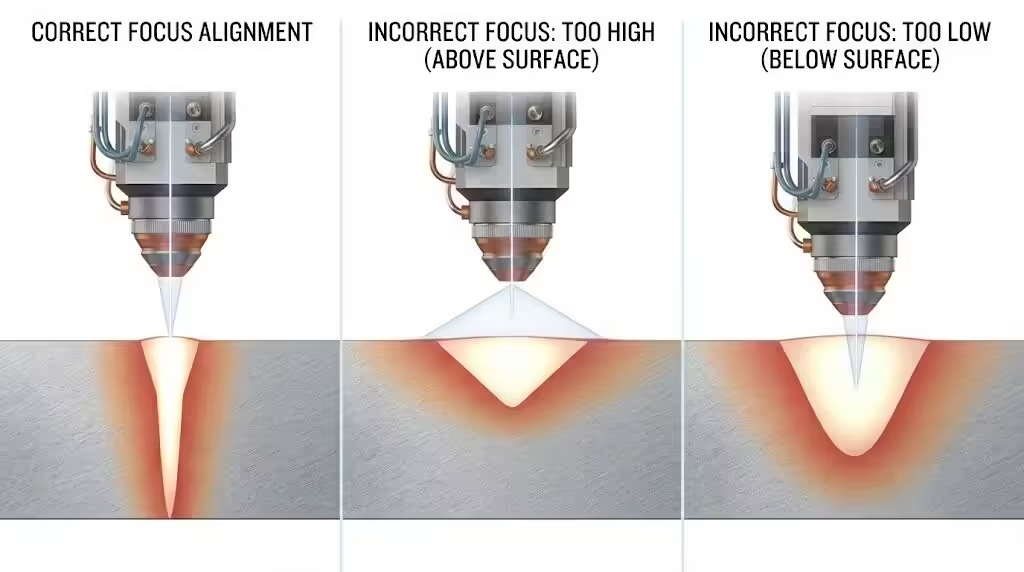
Among the important laser welding machine parameters, focus position is often overlooked by buyers because it is not as visible as laser power or machine size.
However, the focus position directly affects how laser energy is concentrated on the material surface.
A wrong focus position can lead to:
- unstable weld penetration
- inconsistent bead appearance
- excessive heat input
- reduced welding accuracy
The ideal focus position depends on:
- material type
- thickness
- joint design
- required penetration depth
For thin stainless steel sheets, the focus may need to be adjusted differently compared with thicker carbon steel components.
When requesting a quotation, buyers should ask suppliers:
- How is the focus position adjusted?
- Is the system suitable for different material thicknesses?
- Can sample testing verify the recommended setting?
A supplier should not recommend a machine only based on wattage. The welding process needs to match the actual application.
Does Shielding Gas Selection Affect Laser Welding Quality?
Yes. Shielding gas is a critical part of the welding process because it protects the molten weld pool from contamination during welding.
The main purpose of shielding gas is to reduce:
- oxidation
- surface discoloration
- weld defects
- unstable welding conditions
Common shielding gases include:
Argon
Argon is widely used for many stainless steel and aluminum welding applications because it provides stable protection around the weld area.
Nitrogen
Nitrogen may be considered for specific stainless steel applications where suitable process conditions are confirmed.
Helium
Helium can improve heat transfer in certain applications but is usually more expensive.
According to TWI’s technical explanation of shielding gases in welding, shielding gas selection influences weld quality, penetration characteristics, and protection effectiveness.
For buyers preparing a laser welder specification checklist, shielding gas information should include:
- recommended gas type
- gas consumption rate
- nozzle design
- protection requirements
A machine with suitable power but incorrect gas protection may still produce unstable weld results.
When Does a Laser Welding Machine Need Wire Feeding?
Not every laser welding application requires wire feeding.
Many thin sheet metal applications can be completed through autogenous welding, where no additional filler wire is added.
However, a wire feeder becomes useful when:
- the joint gap is larger
- additional filler material is needed
- thicker materials require better joint filling
- appearance requirements are higher
For example:
A tight butt joint between two stainless steel sheets may not need wire feeding.
A component with uneven gaps or thicker sections may benefit from adding filler wire.
- whether wire feeding is required
- wire material compatibility
- wire diameter
- feeding speed range
For more details about application situations, buyers can also review this guide about when a laser welding wire feeder is needed.
The key point is that wire feeding should solve a specific welding requirement, not simply be added as an extra option.
Why Should Buyers Request Sample Testing Before Ordering?
One of the most important steps before purchasing a laser welder is sample testing.
A specification sheet can explain machine capability, but it cannot fully predict the final welding result on a customer’s actual material.
Before ordering, buyers should prepare:
- material samples
- thickness information
- technical drawings
- welding requirements
- expected appearance standards
Sample testing can verify:
| Testing Item | Why It Matters |
|---|---|
| Penetration depth | Confirms welding strength |
| Weld appearance | Checks surface quality |
| Heat affected zone | Evaluates thermal impact |
| Welding speed | Estimates production capacity |
| Joint performance | Confirms suitability |
According to ISO’s overview of welding quality requirements, welding quality depends on controlling procedures, materials, and process conditions.
This is why experienced buyers do not select equipment only from a quotation. They verify whether the machine can achieve the required welding result.
What Should Be Included in a Laser Welder Specification Checklist?
Before contacting suppliers, buyers can prepare the following information:
| Information Buyers Provide | Why Suppliers Need It |
|---|---|
| Material type | Determines suitable welding process |
| Material thickness | Helps select laser power |
| Joint design | Affects welding method |
| Required welding speed | Evaluates production needs |
| Weld appearance requirements | Defines process targets |
| Shielding gas | Ensures proper protection |
| Wire feeding requirement | Determines accessories |
| Sample testing needs | Verifies actual performance |
A complete laser welder specification checklist helps suppliers provide more accurate recommendations and prevents misunderstandings during purchasing.
Final Thoughts
Selecting a laser welder requires more than comparing machine prices or laser power ratings.
The most important laser welding machine parameters are the ones connected to the real production environment: material, thickness, welding speed, focus position, shielding gas, and filler wire requirements.
A clear laser welder specification checklist allows buyers to communicate their needs accurately and helps suppliers recommend equipment that matches the application.
Before ordering, buyers should focus less on choosing the highest power machine and more on confirming whether the welding process can consistently achieve the required results.
FAQ
What parameters should buyers ask before ordering a laser welding machine?
Buyers should confirm material, thickness, laser power, welding speed, focus position, shielding gas, wire feeding, and sample testing requirements.
Is higher laser power always better for welding?
No. The correct power depends on material thickness, welding speed, and application requirements.
Why is welding speed important when choosing a laser welder?
Welding speed affects production capacity, heat input, and overall processing time.
Do all laser welding applications need wire feeding?
No. Wire feeding is mainly used when additional filler material is required or when joint gaps need to be filled.
Why should buyers test samples before purchasing?
Sample testing confirms that the selected machine can achieve the required weld quality on the actual material.