

Sandblasting vs Laser Cleaning Cost Truths
Deciding between sandblasting vs laser cleaning is no longer just a technical choice; it is a financial pivot that defines the modern factory’s bottom line. For decades, abrasive blasting has been the “old reliable” of surface preparation. However, as we move toward leaner production and stricter environmental mandates, the traditional methods are revealing their true cost—not just in grit and dust, but in eroded margins and slowed throughput.
The industrial world is currently witnessing a transition from mechanical force to photonic precision. While the loud, messy roar of a sandblasting cabinet is familiar, the silent, surgical strike of a fiber laser is proving to be the superior investment for shops that value substrate integrity and long-term ROI.
Table of Contents
The Hidden “Debt” of Abrasive Blasting Operations
When managers evaluate sandblasting vs laser cleaning, they often look at the initial machine price and stop there. This is a mistake. Traditional blasting carries a “Hidden Debt”—a collection of ongoing expenses that never appear on the equipment’s invoice but plague the balance sheet every month.
First, there is the logistics of the media itself. Purchasing, storing, and recycling tons of sand, glass beads, or steel shot requires significant space and manpower. Then, there is the waste disposal. Once the media is contaminated with lead paint, heavy oils, or rust, it often qualifies as hazardous waste. According to the Occupational Safety and Health Administration (OSHA), the management of crystalline silica and abrasive dust involves rigorous (and expensive) ventilation and PPE requirements to prevent silicosis
Furthermore, the “secondary cleanup” is a productivity killer. For every hour spent blasting, significant time is lost cleaning the surrounding area, degreasing the part from dust residue, and maintaining the blasting cabinets which are, by design, being destroyed by the very media they hold.
What is Laser Cleaning?
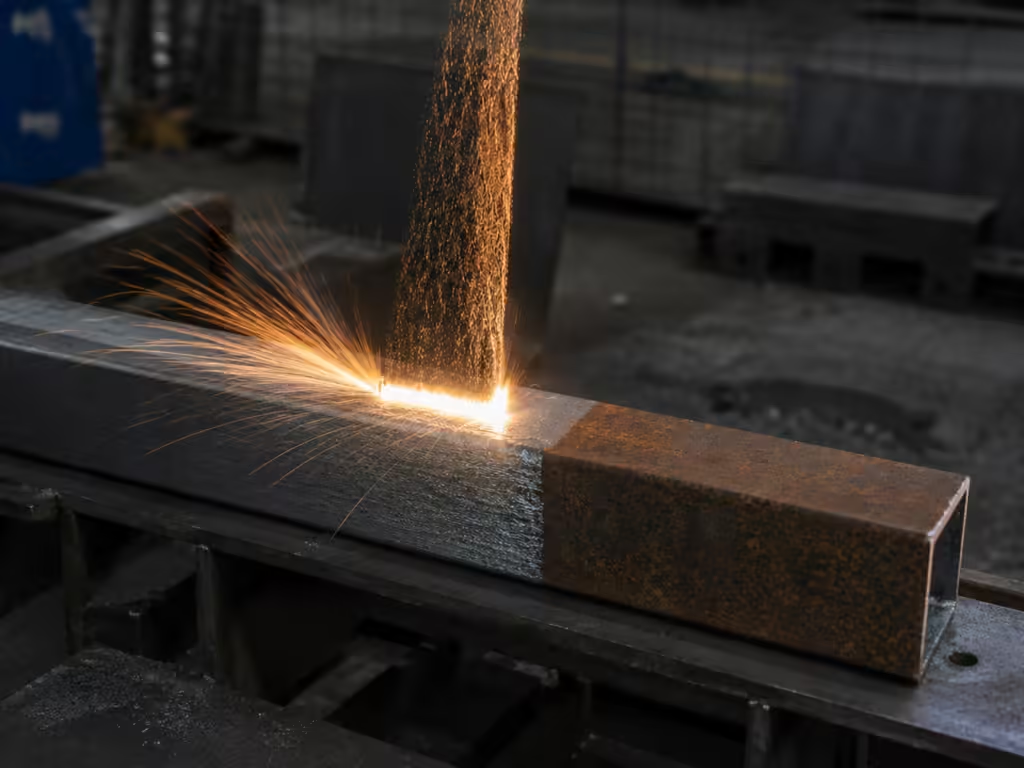
Unlike the blunt force of grit, laser cleaning operates on the principle of selective ablation. A high-energy fiber laser emits nanosecond-duration pulses that are absorbed by the surface contaminants—rust, paint, or oil—but reflected by the metal substrate beneath. This creates a thermoelastic pressure that vaporizes the coating without heating or damaging the base metal.
This “non-contact” nature is the primary differentiator in the sandblasting vs laser cleaning debate. Research published in Scientific Reports (Nature) highlights that laser surface treatment can actually improve the corrosion resistance of the underlying metal by creating a more uniform surface tension [Link: Nature – Laser Ablation Study]. For industries dealing with high-precision molds, aerospace components, or sensitive electronics, the risk of “profile distortion” caused by sandblasting is simply unacceptable.
Sandblasting vs Laser Cleaning in the Modern Workshop
To truly understand the operational shift, we must look at how these two technologies perform in a side-by-side comparison. In the context of sandblasting vs laser cleaning, the winner is usually determined by the specific requirements of the production line.
| Feature | Abrasive Sandblasting | Fiber Laser Cleaning |
| Consumables | High (Sand, Grit, Nozzles) | Zero (Electricity only) |
| Secondary Waste | Massive (Contaminated media) | Minimal (Filtered vapor/dust) |
| Substrate Damage | High risk (Surface profiling) | Zero (Selective ablation) |
| Setup Time | Lengthy (Masking & containment) | Instant (Point and shoot) |
| Automation | Difficult & maintenance-heavy | Easy (Industry 4.0 integration) |
While sandblasting is still effective for massive, low-precision structures like bridge beams or ship hulls, it fails in environments where cleanliness is paramount. The modern factory floor cannot tolerate the airborne particles that blasting generates. Consequently, more facilities are choosing to integrate laser systems directly into their CNC or robotic workflows.
Why Smart Capital Prefers Light over Sand
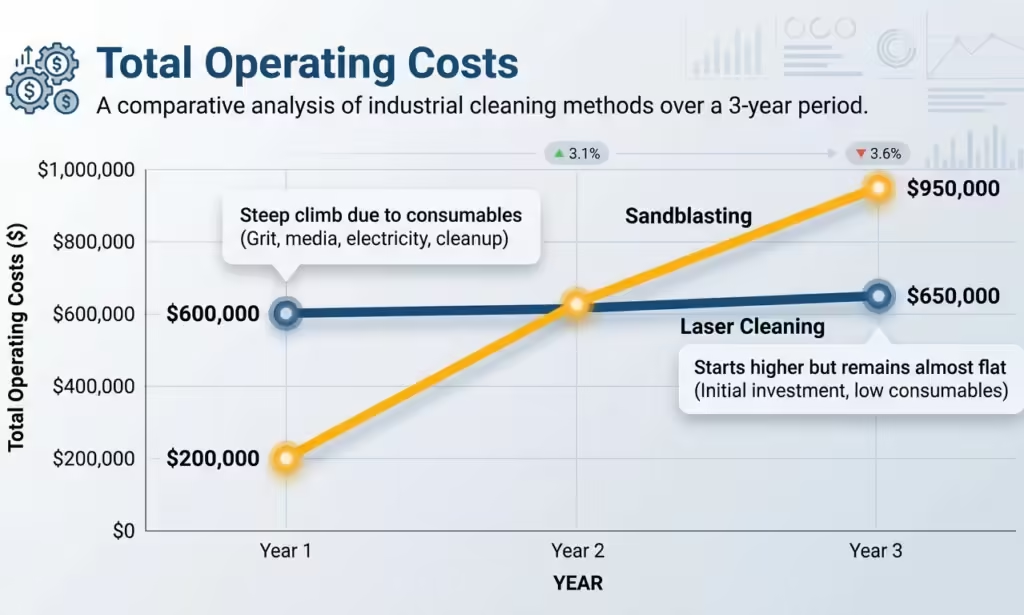
It is time to address the elephant in the room: the sticker price. A high-quality industrial laser system requires a larger upfront investment than a standard blasting cabinet. However, the “Total Cost of Ownership” (TCO) tells a different story.
When you factor in the elimination of grit procurement, the reduction in labor hours for cleanup, and the total removal of hazardous waste disposal fees, the laser system typically reaches a break-even point in 12 to 18 months. As discussed in our comprehensive laser rust removal cost and operating expense analysis, the operating cost of a laser is often less than $1.00 per hour, whereas sandblasting costs fluctuate wildly with the price of media and electricity for heavy-duty compressors.
In the long-term battle of sandblasting vs laser cleaning, the laser is a fixed asset that pays for itself through operational savings, while sandblasting remains a variable expense that continues to drain cash flow every time a new bag of media is opened.
ESG and Regulatory Compliance
Environmental, Social, and Governance (ESG) standards are no longer optional for major manufacturers. The environmental footprint of sandblasting vs laser cleaning is starkly different. Blasting creates tons of solid waste that must be landfilled. It also consumes massive amounts of compressed air, which is one of the most energy-inefficient utilities in a factory.
Laser cleaning, by contrast, is a “green” technology. It produces no chemical runoff and very little solid waste. Most systems are equipped with high-efficiency particulate air (HEPA) extraction systems that catch vaporized contaminants at the source. This allows factories to meet ISO 14001 environmental management standards more easily and provides a safer, quieter, and healthier environment for their employees.
Sandblasting vs Laser Cleaning for High-Precision Applications
In specialized sectors like EV battery manufacturing or semiconductor mold maintenance, the choice is already made. These industries cannot afford the microscopic “pitting” or surface roughness introduced by grit. The ISO 8501-1 standard for surface cleanliness is much easier to achieve consistently with a laser, as the parameters (power, frequency, scan speed) can be locked in digitally.
Whether you are preparing a weld joint for an automated robotic line or stripping paint from a vintage aircraft component, the repeatability of laser technology eliminates the human error inherent in manual blasting. In the debate of sandblasting vs laser cleaning, the ability to save a digital “recipe” for a specific material is a game-changer for quality control departments.
Conclusion
The industrial landscape is unforgiving to those who cling to inefficient traditions. While abrasive blasting served the 20th century well, the demands of the modern era—precision, sustainability, and automated ROI—point toward a different light. Choosing sandblasting vs laser cleaning is about more than just removing rust; it is about deciding what kind of workshop you want to run.
By eliminating the “Dust Tax” and the logistical nightmare of blasting media, you free your facility to focus on what matters: high-quality production and healthy margins. Ultimately, the transition from sandblasting vs laser cleaning represents the evolution of manufacturing into a cleaner, faster, and more profitable era.
FAQ
How does laser cleaning work compared to blasting?
Laser cleaning uses light energy to vaporize contaminants, whereas blasting uses physical friction. This makes laser cleaning non-abrasive and much cleaner for the surrounding environment.
Can laser cleaning replace sandblasting entirely?
In high-precision manufacturing, yes. However, for massive, outdoor structural steel (like bridges), sandblasting remains more cost-effective for now due to the extreme surface area involved.
Is laser cleaning safe for the operator?
Yes, provided the operator wears the correct laser safety goggles (OD7+) and uses a proper fume extraction system. Unlike sandblasting, there is no risk of silicosis.