

Laser Cutting Machine for Leather: Complete Guide
Table of Contents
Introduction
Using a laser cutting machine for leather offers unmatched precision, speed, and flexibility for workshops, makerspaces, and small manufacturers. Whether producing handbags, wallets, belts, or custom leather goods, a suitable laser cutting machine ensures clean edges, minimal material waste, and consistent quality. Selecting the right machine is crucial to meet production demands while maintaining efficiency and safety.
Leather varies in thickness, texture, and coating, which makes traditional cutting methods like scissors, rotary knives, or die-cutting less consistent for complex designs. A laser cutting machine for leather solves these challenges by providing precise, repeatable cuts while accommodating intricate patterns. It is widely used in fashion accessories, leather crafts, prototypes, signage, and small-batch production.
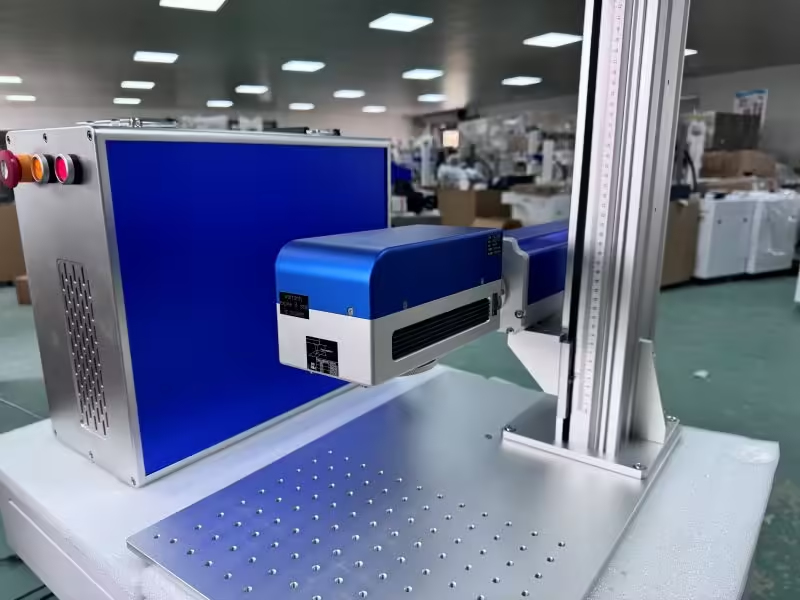
Why Choose Laser Cutting for Leather
Laser cutting of leather has several advantages over conventional methods:
- High precision: Clean cuts for intricate designs without fraying.
- Reduced waste: Accurate cuts minimize leather scrap.
- Versatility: Easily switch patterns or designs using software without new tooling.
- Speed: Faster than hand-cutting or die-cutting for small batches.
- Consistency: Reproducible results for multiple pieces in production runs.
These benefits make laser cutting ideal for businesses looking to scale production while maintaining high-quality craftsmanship.
Key Features of Leather Laser Cutting Machines
When selecting a laser cutting machine for leather, consider the following:
Laser Type and Power
CO₂ lasers are most suitable for leather. Their wavelength is absorbed well by organic materials, producing clean cuts. Laser power affects the thickness and speed of cutting. Too much power can burn edges, while too little may require multiple passes.
Work Area and Bed
The work area should accommodate full leather sheets or hides. Flatbeds with honeycomb or slatted surfaces support the material and allow smoke and debris to escape, preventing scorching or reflection marks.
Ventilation and Air Assist
Cutting leather produces smoke and fumes. Proper ventilation and air assist are critical for safety and maintaining optics. Exhaust systems remove smoke, reducing fire risk and preventing residue on lenses and mirrors.
Software and Precision
Machines should support vector files (DXF, SVG) and provide adjustable speed, power, and focus settings. This allows precise control for different leather types and thicknesses.
Material Testing
Leather varies by type and finish, including vegetable-tanned, chrome-tanned, PU, coated, or dyed surfaces. Conduct test cuts to determine optimal settings before full production.
Typical Leather Cutting Settings
| Leather Type | Thickness | Laser Power/Speed (CO₂) | Notes |
|---|---|---|---|
| Thin genuine leather | 0.8–1.2 mm | 35–45% power, 200–300 mm/s | Smooth cut, slight edge darkening possible |
| Medium vegetable-tanned leather | 1.5–2 mm | 45–55% power, 150–200 mm/s | Avoid scorching by slower speed |
| PU/Synthetic leather | 1–1.5 mm | 30–40% power, 220–320 mm/s | Ensure good ventilation due to fumes |
| Thick leather | 2–3 mm | 55–70% power, 100–150 mm/s | Multiple passes may be needed |
| Coated/finished leather | varies | Start low, adjust incrementally | Prevent damage to coating |
*Settings depend on machine power, focal length, and bed setup. Always perform sample cuts.
Applications of Laser Cutting for Leather
Laser cutting machines for leather are versatile and widely applied in industries such as:
Fashion and Accessories
Cutting belts, wallets, handbags, shoes, and decorative leather items with precise designs.
Prototyping and Packaging
Creating leather prototypes, product mockups, and packaging components with consistent quality.
Decorative and Craft Items
Custom patches, keychains, charms, and small leather crafts.
Educational Workshops
Teaching design, prototyping, and manufacturing techniques safely in makerspaces or schools.
Small Industrial Production
Batch production for small to medium leather goods factories.
Best Practices for Leather Laser Cutting
- Prepare Material: Ensure leather is clean, flat, and free of dust or moisture.
- Ventilation: Use an exhaust system to remove smoke and fumes.
- Test Cuts: Always perform test cuts to optimize speed, power, and focus.
- Proper Support: Use honeycomb or slatted beds to prevent scorch marks and allow smoke escape.
- Post-processing: Light edge finishing or burnishing may enhance appearance if needed.
Pros and Cons
Pros
- Clean, precise cuts with minimal waste
- Flexibility for intricate designs
- Faster than manual cutting
- Easy to replicate designs for small batches
- No need for costly dies or specialized tools
Cons
- Generates smoke and fumes requiring ventilation
- Improper settings can cause burning or edge darkening
- Thick leather may require multiple passes
- Learning curve for safe operation
FAQ
What types of leather can be cut with a laser?
Most organic, synthetic, and coated leathers can be cut if machine settings are properly adjusted.
Will laser cutting damage leather?
Proper settings result in clean edges without affecting flexibility or strength. Excessive power can cause burning or weaken fibers.
How thick can leather be laser cut?
Typically up to 3 mm; exact thickness depends on machine power and number of passes.
Do I need ventilation?
Yes. Exhaust systems and air assist are necessary to remove smoke and fumes, ensuring safety and preventing lens contamination.
Is laser cutting better than die-cutting?
For small batches, intricate patterns, and custom designs, laser cutting is more flexible and cost-effective. Die-cutting may be better for large-volume, repetitive production.
Ready to Upgrade Your Leather Production?
If you’re unsure which laser cutting machine for leather is best for your workshop size, production goals, or materials, our team is here to help. Contact us today for a personalized consultation and select a solution that delivers precision, efficiency, and long-term reliability. Don’t wait—reach out now to enhance your leather craftsmanship with confidence!